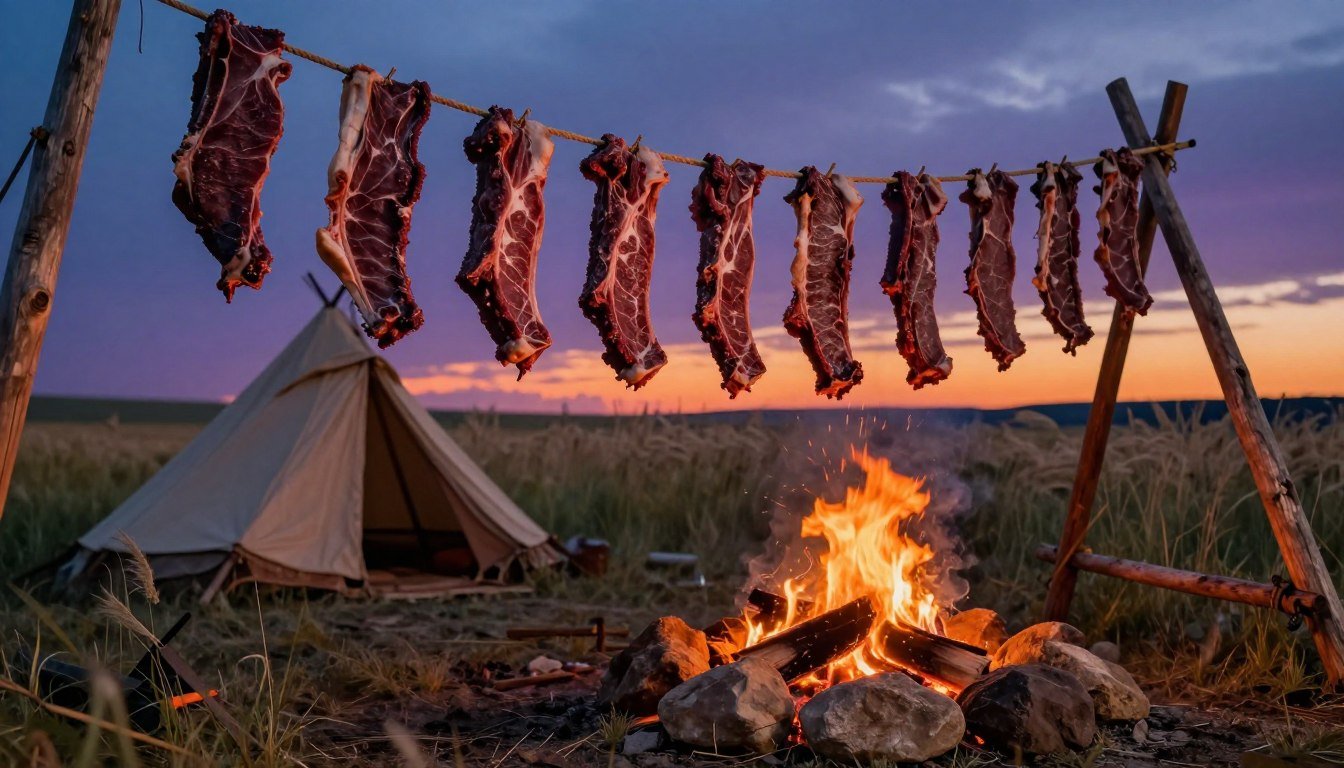
Wind hums across a prairie camp at dusk, and thin strips of bison meat hang dark and stiff over a smoky fire. A woman pours hot fat over pounded meat, and the air smells of smoke and warm grease. The history of pemmican starts in scenes like this one.
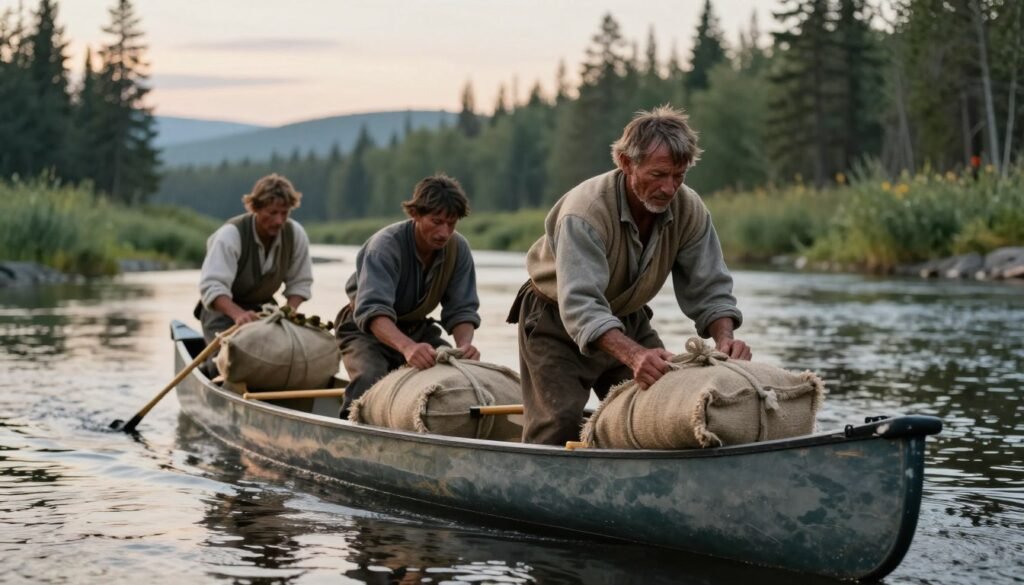
Weeks later, the same food rides in a canoe, then on a polar sledge. A block of dried meat and fat fed traders, paddlers and explorers across a continent. The story covers its origins and trade, its craft and shelf life, and its afterlife and how to taste it today.
The name comes from the Cree word pemigan, “he makes grease.” Indigenous peoples of North America made this food centuries before Europeans arrived. The tale begins with the people who invented it.
Key Takeaways
- Pemmican is a food of dried meat and fat, sometimes with fruit.
- Indigenous peoples of North America made it long before European contact.
- Fur companies relied on it to feed voyageurs.
- Dry meat and a fat seal helped it last months or years.
- Polar explorers carried it into the 1920s.
- A home batch works with lean meat, suet and a low oven.
The History of Pemmican from Plains Camps to Canoe Brigades
The word pemmican comes from the Plains Cree pimîhkân, built on pimî, meaning “fat” or “grease.” Pemmican itself is dried bison, elk, deer or moose meat pounded fine and mixed with fat. It was a food built to survive the leanest winter.
Cree Origins and the Plains Nations
The Cree, Métis, Ojibwe, Blackfoot and Lakota perfected the food. The Lakota called it wasná. Britannica’s pemmican entry describes it as a staple of Plains peoples.
Families stored it as insurance for lean winters and long hunts. A small bag held weeks of energy.
The Fur Trade and the Pemmican War
Peter Pond brought pemmican into the organized fur trade around 1779. The Hudson’s Bay Company and North West Company then fed voyageurs, the canoe workers, up to a pound a day. By weight, pemmican could be worth more than the furs traded, and traders called it as good as gold.
George Colpitts tells this story in Pemmican Empire. The Canadian Encyclopedia also covers the pemmican trade.
- 1779: Peter Pond gets pemmican in the Athabasca region.
- 1793: Alexander Mackenzie describes it.
- 1804: traders at Pembina switch from beaver to bison and pemmican.
- 1814: Miles Macdonell’s Pemmican Proclamation bans export and sparks the Pemmican War.
- Late 19th century: the bison herds collapse.
The Métis dominated the trade in the middle 19th century with annual hunts at Pembina and Walhalla. The same hunts that fed the trade also helped strip the plains of bison.
The hunts that fed the fur trade also helped empty the plains of bison.
So how did such a simple mix last so long?
How Pemmican Was Made and How Long It Lasts
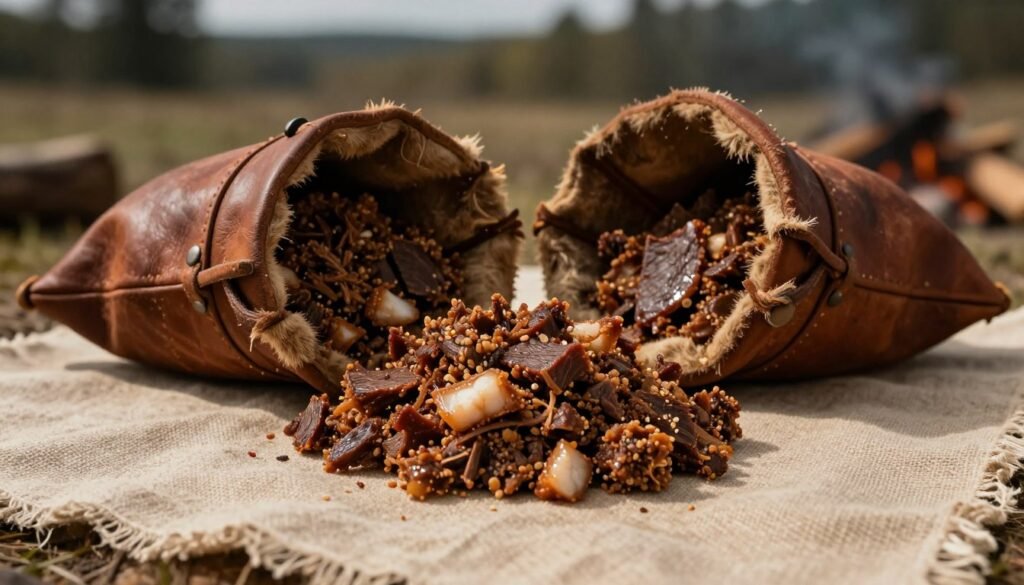
Rendering means melting raw fat slowly and straining it until only pure liquid fat remains, which sets solid as tallow. That step made everything last. Native peoples dried lean meat, pounded it to powder, poured hot fat over it and sealed it in hide.
Cooks cut meat thin against the grain and dried it in sun and prairie wind for one or two days, sometimes with smoke. Raw meat loses about three quarters of its weight, so 2 pounds gives about 1/2 pound dried. The classic mix is roughly 1:1 meat to fat by weight.
| Type | Fat used | Texture | Typical extras |
|---|---|---|---|
| Sweet pemmican | Marrow grease, softer fat | Fine and smooth | Chokecherries, saskatoons, Pembina berries |
| Trade pemmican | Harder saturated fat | Rough and gritty | Bone bits, fur, bark |
| Modern home version | Beef suet | Waxy and gritty | Optional dried fruit |
Packers pressed it into bison hide bags, sewed the seams with rawhide and coated them in tallow. Little moisture is left, and the fat seal keeps spoilage out. Kept dry, pemmican can last years or even decades, and months in harsh conditions.
Fruit shortens that life, and flavor never improves with age. Fresh pemmican is waxy, gritty and fatty with a beefy taste, and it holds almost 4,000 calories per pound. Once the plains trade ended, its story moved far north.
Pemmican After the Fur Trade: Polar Sledges to Modern Kitchens
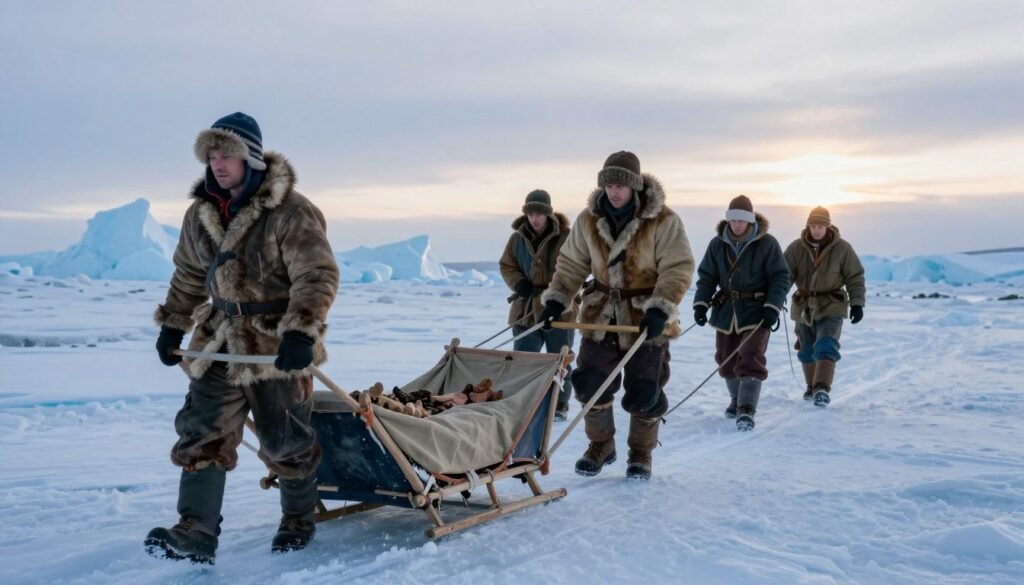
Explorers and the militaries of several countries carried pemmican as a ration into the 1920s. Polar parties relied on it for Arctic and Antarctic treks. Shackleton’s and Scott’s expeditions also packed pemmican made for sledge dogs.
Indigenous communities still prepare it as a link to traditional foodways. Pemmican is eaten raw, fried (rechaud) or boiled into a stew called rubaboo.
The Cultural Echo: Cinema, Music & Modern Table
For a period view, watch The Great White Silence (1924), Herbert Ponting’s film of Scott’s Terra Nova expedition. Voyageurs paddled to songs like A la claire fontaine. Backpackers now carry pemmican as dense trail food.
Bringing the History Home
For a pemmican recipe, dry 2 pounds of lean bison or beef on a wire rack in a 175 degree Fahrenheit oven for 10 to 12 hours. The meat must turn truly brittle before grinding. Grind it in a food processor or a stone mortar, render 1/2 pound of suet or tallow, and mix it in with 1 cup finely chopped dried cranberries or chokecherries. Press it into a muffin tin to harden.
Store it in a freezer bag, or in a tallow-sealed hide or fur pouch. For pemmican for sale, look to small tallow makers and farmers markets. The story it carries is bigger than any one batch.
Conclusion
A tallow-sealed pouch rides on a sledge, or sits wedged between canoe packs. Inside lies an Indigenous invention that fed an entire fur trade and carried explorers to the ends of the earth. The food shows how much a patient hand can do with meat and fat.
Dry a small batch of lean beef or bison strips until they snap, and taste a sweet-style pemmican.