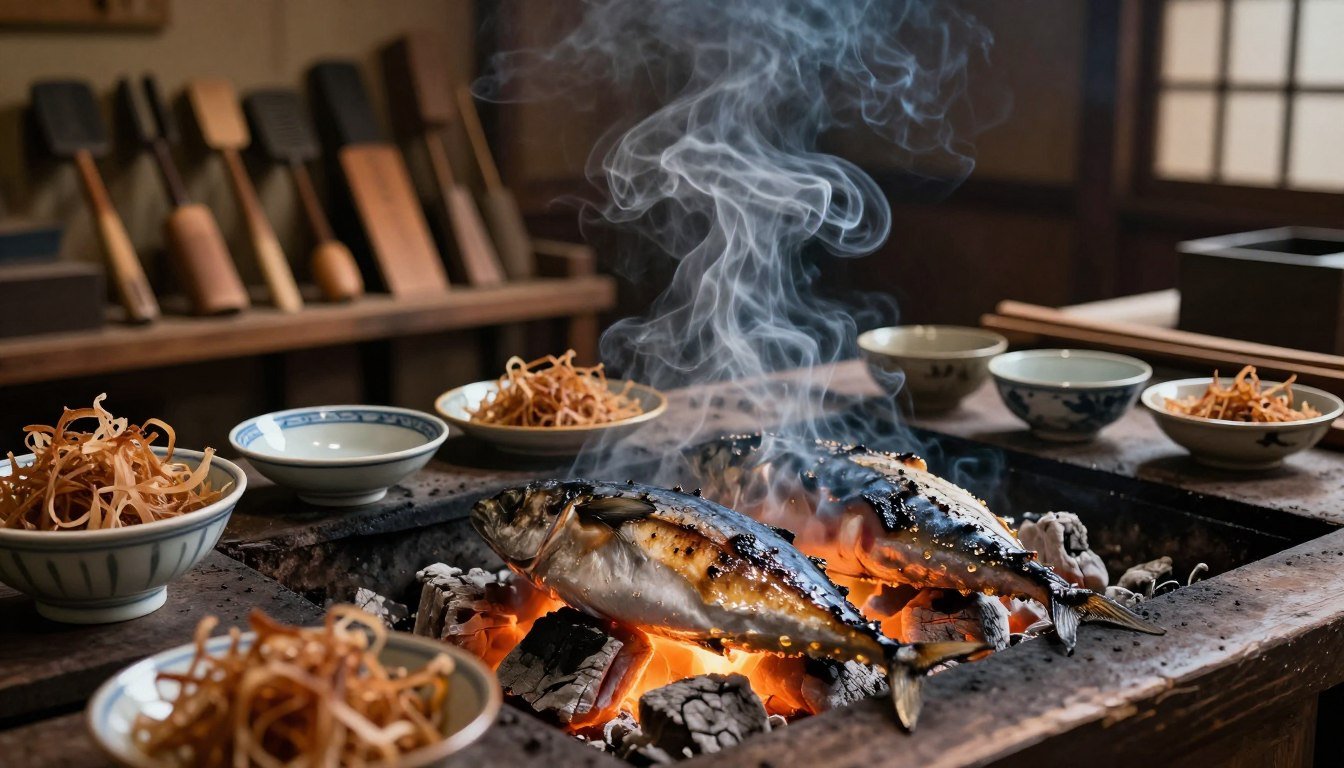
Silk sleeves rustle in an Edo-period teahouse as travelers sit down to rest. Smoke from a wood fire curls through the dark beams. The history of katsuobushi begins in rooms like this, where fillets of skipjack tuna turned black over embers.
Arabushi is the hard, smoke-dried skipjack fillet, the first finished stage of katsuobushi before any mold is applied. A full block is often called the world’s hardest food, and common claims say Guinness agrees. Yet its flakes are so thin you can see through them, and a slight breeze or heat makes them move.
Fire, time and trade built this wood-like fish, and it became the soul of dashi, the soup stock behind Japanese cuisine. The oldest traces of the fish lie far from any kitchen, on Japan’s ancient shores.
Key Takeaways
- Skipjack tuna bones show that people ate the fish in Japan about 6,000 years ago.
- Boiled, shade-dried nikatauo was an early tax payment and the forerunner of katsuobushi.
- Smoke drying and then mold turned plain dried fish into the block known today.
- Arabushi is smoked only, while karebushi and honkarebushi add mold and months of drying.
- Bonito flakes are simply the shaved form of the katsuobushi block.
- Few artisans still make honkarebushi by hand, so real flakes help keep the craft alive.
From Jomon Shell Mounds to Tax Payments in Boiled Fish
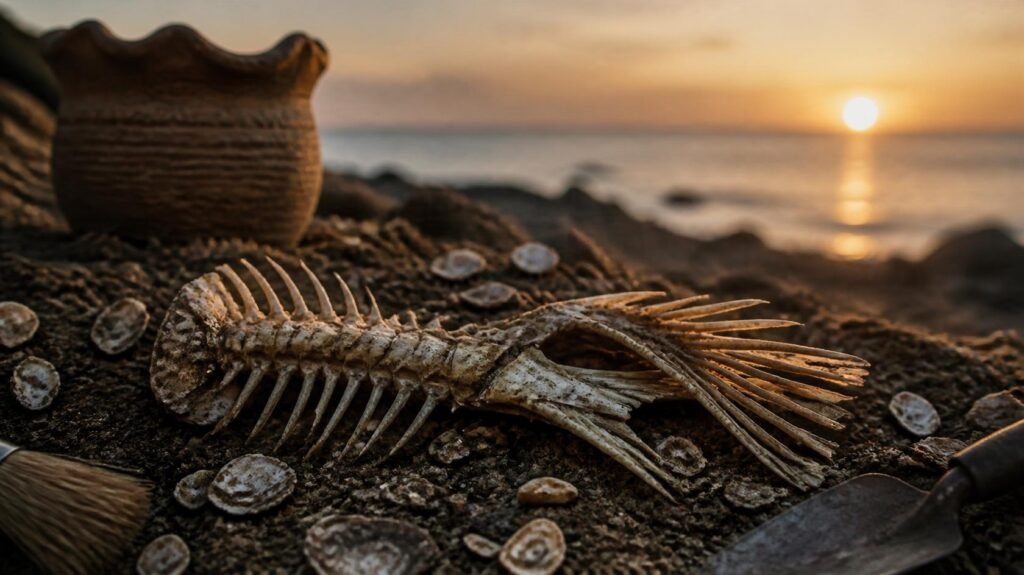
Bones of skipjack tuna lay in a Pacific shell mound for thousands of years before anyone smoked a fillet. Diggers pulled large quantities of them from the Ohora shell mound in Ofunato, Iwate Prefecture. They show that people ate the fish from the late Jomon Period, about 4000 BC.
The word katauo, an earlier form of katsuo, appears in the Kojiki, Japan’s oldest historic text, dating to 712. The Ryo no Shuge, a commentary on the Yoro Code enacted in 757, lists nikatauo, or boiled skipjack, as an alternate way to pay taxes. This early fish was only boiled and shade-dried, hard and plain, with no smoke and no mold.
The first katsuobushi ancestor was not smoky at all. It was boiled fish dried hard in the shade.
The Yoro Code described it as fish boiled and dried hard. Scholars see nikatauo as the forerunner of katsuobushi, a preserved Japanese food that traveled well. Samurai of the Muromachi Period, about 1338-1573, reportedly carried katsuobushi to chew in wartime.
English speakers often call the fish bonito, and the name fits a long record of use. Still, nothing in that old fish tasted of smoke. The leap from boiled-dried fish to a shipwrecked fisherman and a wood fire came much later.
How the History of Katsuobushi Turned on Smoke and Mold
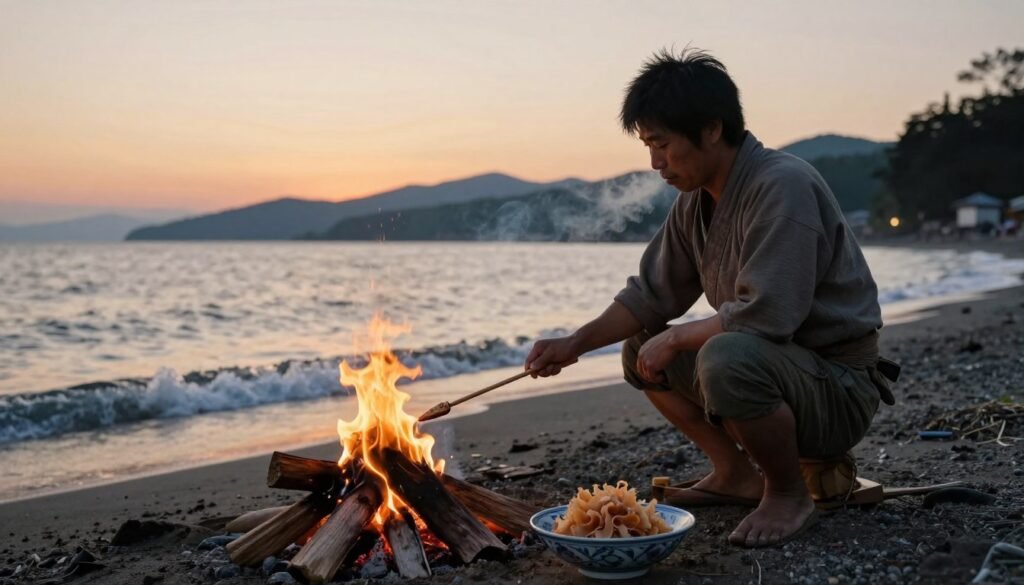
A shipwrecked fisherman lit a fire on the Tosa shore in 1674, according to a well-known tale. He was Jintaro, from Kishu, in present-day Wakayama. A storm threw him onto the beach at Usanoura in Tosa, now Kochi, where he smoked his skipjack over the wood fire and found the flavor much improved.
The invention is credited to Kadoya Jintaro of Inami in the late 17th century. A single clear inventor is a legend, and every date here is approximate. Tosa kept the recipe as a domain secret for years.
Mold refinement dates to about 1770, and three rival stories explain it. In one, a Tosa merchant devised it. In another, arabushi packed in a wooden box molded during boat shipping. In the third, a wholesaler hesitated to throw out moldy arabushi in his warehouse and found the flavor stronger.
All three tales share a lucky accident that became deliberate. Honkarebushi production began around the middle of the Edo period (1603-1868). The history of katsuobushi, then, turns on a mistake that someone chose to repeat.
The secret did not stay in Tosa. Mori Yahei brought the recipe to Kago in Satsuma, now Makurazaki, in the early 1700s. A craftsman called Yoichi carried it to Awa and Izu in the late 18th century.
Mold is a fungus, the same kind of life used in miso, soy sauce and sake. So what does it actually do to a smoked fillet? The answer lies in the craft of making it.
Inside the Smoking Room: How Katsuobushi Is Made
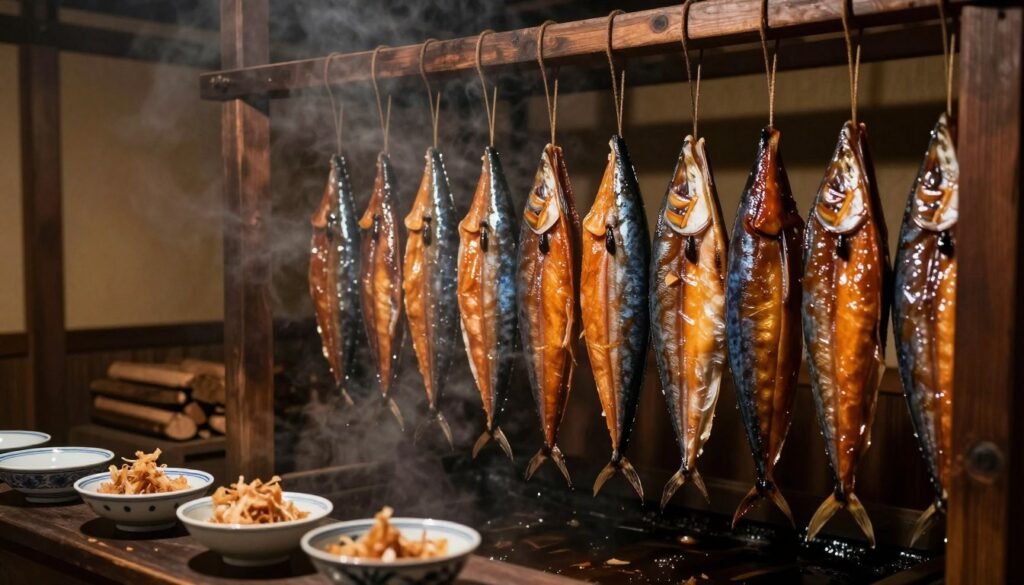
Every katsuobushi block starts frozen on a fishing boat, where crews flash freeze the skipjack, and workers thaw it at the plant. The process then runs through cutting, basket placement, simmering for about two hours, deboning, smoking and drying. Makers of the Satsuma type use fish of seven kilograms or more.
Arabushi takes about 20 days, karebushi two to three months, and honkarebushi about six months. Simmering comes first because it coagulates protein, so inosinic acid is not lost in smoking. The wood-fired smoking room then works on the fillets for about a month.
That smoke stage gives arabushi, and shaving its charred surface makes hadakabushi. The Wikipedia entry on katsuobushi separates this smoke-only kind from the molded kinds. For karebushi, workers coat the fillets with mold, sun-dry them for about two days, then store them for about two weeks.
They repeat that cycle over three or four months. The first mold looks faintly blue, then turns yellow, and by the third pass it is whitish like deadwood. In plain words, the mold eats moisture, breaks fat and proteins into amino acids, and keeps other microbes away, so the broth runs clearer.
| Type | What is done | Time | Broth |
|---|---|---|---|
| Arabushi | Simmered, then smoked and dried | About 20 days | Smoky, moderately acidic |
| Hadakabushi | Arabushi with charred surface shaved off | About 20 days | Smoky, like arabushi |
| Karebushi | Molded and sun-dried | 2-3 months | Sweeter, clearer |
| Honkarebushi | Four to five mold passes | About 6 months | Refined, mild, clearest |
Makurazaki, in Kagoshima Prefecture, is the largest producer. In 2006 its output was 15,856 tons, yet only 493 tons were honkarebushi, since most is arabushi. Final water content sits at about 18-20 percent.
Shops sell the block as whole fillets. Back fillets are osubushi (male) and belly fillets mesubushi (female). At the end, the block is hard as wood, ready for a blade.
Shaving a Rock: Tools, Flakes and Luck
A blade scraped a wooden box in a Meiji-era kitchen, and thin shavings fell into a small drawer. That box was the kezuribako, a wooden grating box invented in Tosa. Its making was banned from export, like katsuobushi itself, so it spread only in the Meiji Period (1868-1912).
Cooks shaved katsuobushi like a pencil before the box existed. Over time, the tools changed in this order:
- A knife and a small box, shaving the block like a pencil
- The Tosa kezuribako, a wooden grating box
- Electric shavers that work like shaved-ice machines
- Pre-shaved packs, which are how most katsuobushi sells now
The shaved flakes are called kezuribushi. Bonito flakes is the common English name for them, while katsuobushi is the whole block, so bonito flakes vs katsuobushi is really flakes versus block. For katsuobushi pronunciation, say kah-tsoo-oh-boo-shee.
The name is a homonym for “winning warrior” from the Sengoku period, so it became a lucky talisman. Written with characters for married couple, it is a wedding engagement or parting gift. A belly cut (mebushi) and a back cut (obushi) together symbolize a happy couple.
A gifted pair of blocks sat in the home, then in the pot, and the same flakes now flavor dashi in millions of kitchens. That daily use brings pressures the old makers never faced.
Dashi, Umami and a Craft Under Pressure
Katsuobushi gives dashi its smoky depth by releasing umami with little salt. Dashi is the soup stock of Japanese cuisine, and processing roughly triples the protein content of skipjack, so a few shavings carry a lot of taste.
Katsuobushi lets a cook add deep umami without piling on salt. That is why it sits under so much Japanese cooking.
Awasedashi blends kelp (kombu) with katsuobushi and is the most widely used kind. Cooks soak the kelp in water, heat it almost to a boil, remove it, then add the shaved flakes.
Why Katsuobushi Became the Heart of Dashi
One ingredient serves many Japanese dishes, and it also appears in seasoning:
- Miso soup
- Noodles in hot broth
- Tempura sauce
- Furikake over rice
- Mentsuyu and instant products
The Modern Craft: Instant Dashi and Dwindling Artisans
Makurazaki made 6,593 tons in 1980 and 10,421 tons in 1991. Between April 2007 and March 2008 it made 13,992 tons, 43 percent of the three major areas. Yamagawacho held 31 percent and Yaizu 26 percent.
Output rose even as home dashi-making declined, because much goes into instant soups and granulated seasonings. Few artisans in Makurazaki still make it by hand, though Kyoto chefs often ask for Satsuma-type honkarebushi. The katsuobushi price depends on grade, block versus pre-shaved packs, and quantity.
Makurazaki’s makers also look abroad. Makurazaki France Katsuobushi began in 2013 with 10 companies and built a production unit in Concarneau, France.
The Cultural Echo: Cinema, Music & Modern Table
Flakes on takoyaki and okonomiyaki wave in the rising steam. Katsuobushi-gohan, yaki-nasu and hiyayakko wear them too, and okaka, flakes mixed with soy sauce, fills onigiri in under two minutes.
For a film, watch Tampopo (1985), Juzo Itami’s comedy about a ramen noodle shop. It shows how Japanese food ties into daily life.
Bringing the History Home
Buy a kezuribako and a whole block of honkarebushi for a clearer, milder broth. Choose arabushi when a smoky, strong broth is the goal. Fresh shavings smell nothing like a bag of pre-shaved flakes.
Make a kombu plus katsuobushi dashi: soak the kombu, heat it near boiling, lift it out, then shave the block into the pot. Each bowl carries the history of a fish that fire and time reshaped, and the closing thoughts return to that idea.
Conclusion
A block of katsuobushi is a fish that fire, patience and a lucky mistake turned into wood. No clever recipe made it. A fisherman’s smoky fire and a moldy warehouse showed people what time could do to a fillet.
Two ideas stay with the story. A chance mistake became a craft, and choosing real flakes keeps that craft alive. The flavor of a freshly shaved block is also nothing like a pack that has sat for months.
Here is one step to take: buy or shave a small block this week and taste the difference.