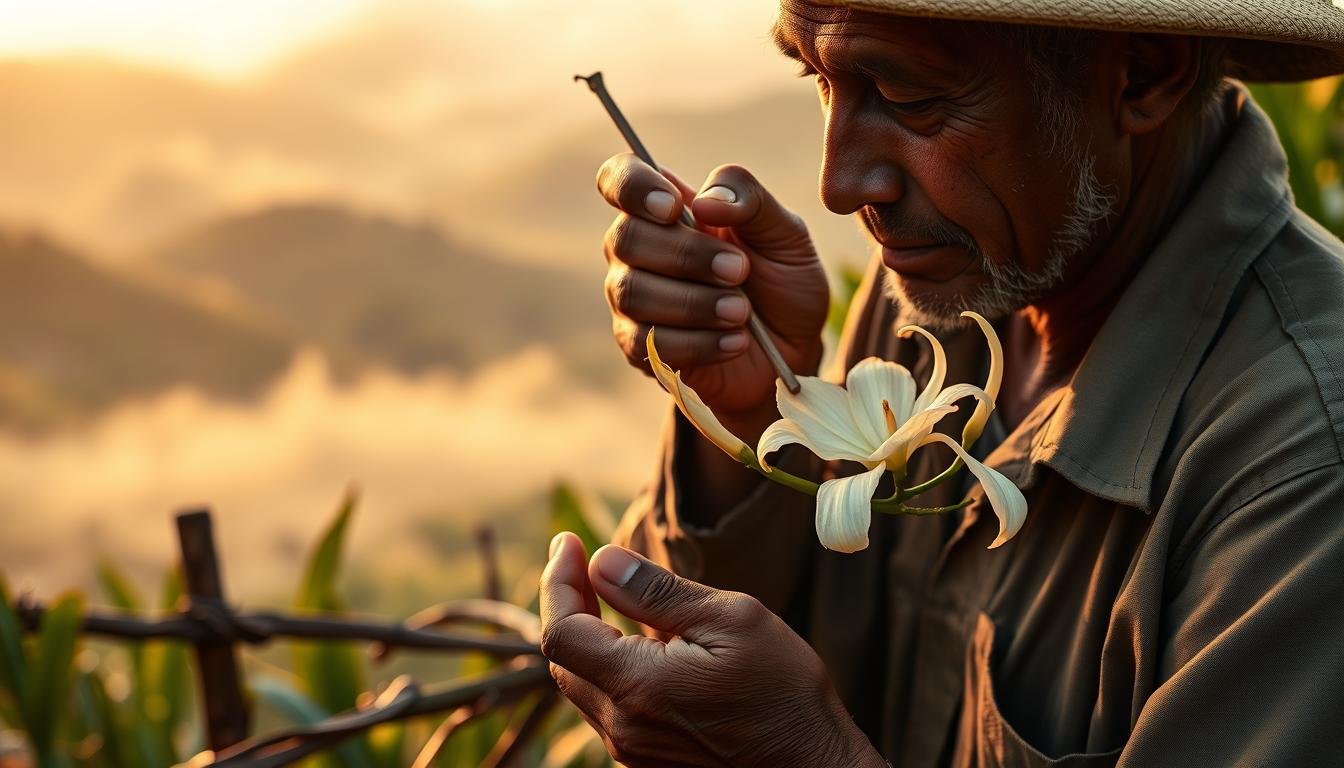
Farmers move through snaking vines at dawn, searching for pale, waxy flowers that will not last the morning. Each blossom opens for a single day, and each one must be found before the sun closes it. The history of vanilla beans rests on that small, fleeting window.
With a thin pointed stick, a farmer lifts the membrane between the male and female parts of the flower. Then he presses them together with thumb and forefinger. If the work succeeds, the swollen green base turns into a fingerlike pod.
That tiny blossom now reaches about 18,000 products on the market that contain vanilla flavor. One pod has carried fortunes for traders and misery for workers. The story begins where the vine first grew wild, in Mesoamerica.
Key Takeaways
- Vanilla flowers open for one morning, so farmers pollinate them by hand.
- The Totonac of Veracruz were the first known growers, and Mexico held a monopoly for about 300 years.
- Edmond Albius, a 12-year-old enslaved boy, devised hand pollination on Réunion in 1841.
- Curing takes about a year, and 5-7 pounds of green beans make 1 pound of cured beans.
- Less than 1 percent of vanilla flavor comes from real beans.
- Jefferson brought a vanilla ice cream recipe from Paris to America.
The History of Vanilla Beans Begins with the Totonac
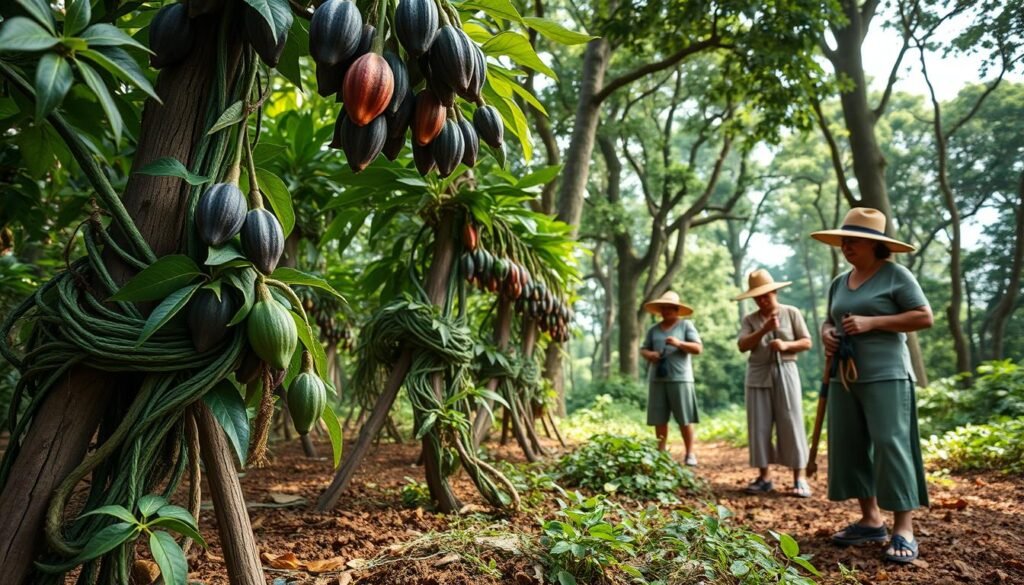
The Totonac of Veracruz were the first known growers of vanilla. Vanilla grew wild in tropical forests across Mesoamerica, but the Totonac of modern-day Veracruz are credited as the earliest to tend it as a crop. So the answer to who created vanilla is a people, not one inventor.
The oldest reports of vanilla use come from the pre-Columbian Maya, who put it in a cacao drink. In the 15th century the Aztecs conquered the Totonac. They added vanilla to chocolatl, a drink of nobility, and vanilla became tribute paid to Aztec rulers.
Vanilla began as a sacred flavor owed to kings. Its wealth was built on the skill of the people who grew it.
The Spanish conquest of the Aztecs came in 1519. Cortés is said to have carried vanilla and cacao to Europe. Not everyone liked the new taste: one early Spaniard called chocolate a drink for pigs.
For about 300 years Mexico was the only producer. Over that time vanilla stayed an additive to chocolate. That changed in the early 17th century, when the apothecary Hugh Morgan made all-vanilla sweetmeats for Queen Elizabeth I.
The first known English vanilla recipe appears much later, in the 1805 edition of Hannah Glasse’s The Art of Cookery. Historian Eric T. Jennings traces this long path in a Yale University Press history of vanilla, from its Central American roots to the global table. That origin is why Mexican vanilla still carries a special weight with collectors and cooks.
Europe held the vine in greenhouses, but it never produced a pod.
Why Europe Could Not Grow Vanilla Until a Twelve-Year-Old Solved It
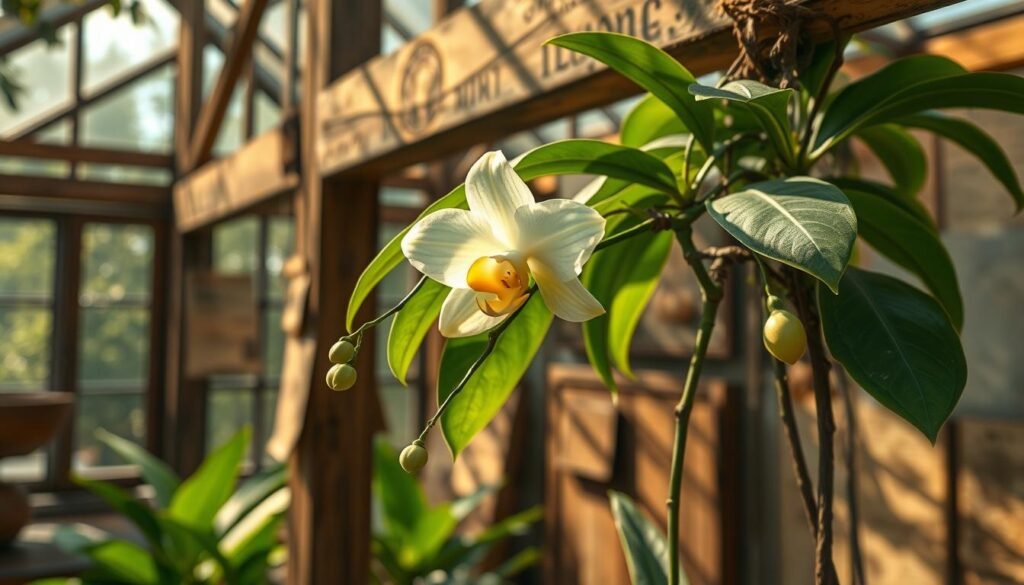
The vine flowered in European greenhouses and produced nothing, because the vanilla orchid needs a very specific kind of help. Each flower stays open only about 24 hours, and without a pollinator it simply drops. Botanical gardens in France and England kept the plants alive for years without a single pod.
The Orchid That Would Not Fruit
The vanilla orchid is one of many edible orchids, and it is a climber. Its vines can reach 300 feet. The pod it makes holds thousands of tiny black seeds.
In 1836 Belgian horticulturist Charles Morren reported that the Melipona bee pollinates the flower in the wild. A recent study suggests Euglossine bees may be the main pollinators. Either way, those bees lived in Mexico, not in European glasshouses.
Edmond Albius and the Stick on Réunion
In 1841 Edmond Albius, a 12-year-old enslaved boy, solved the puzzle on Réunion, then called Île Bourbon. The volcanic island is about 39 miles long. He devised hand pollination: with a stick, he lifted the flap called the rostellum, then pressed the parts together with a flip of his thumb.
The method spread to Madagascar, Tahiti, Indonesia and India, and later returned to Mexico. Nearly all commercial vanilla is now hand-pollinated. By one measure Madagascar and Réunion supply about 75 percent of the world’s vanilla, and Madagascar alone supplies 60-80 percent.
Albius gained little from a technique that built whole economies. His gift to the world is still repeated every morning on every plantation. The technique spread worldwide, but the pod still had to be cured.
From Green Pod to Price Spike: Curing, Cost and Imitation
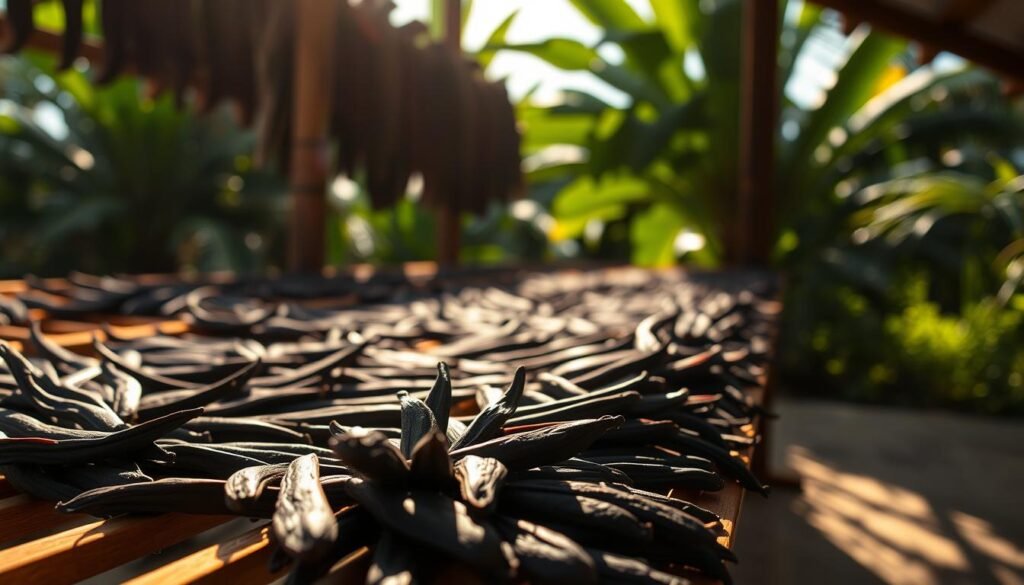
A vanilla bean is not ready when it is picked. Curing turns a green, odorless pod into a dark, fragrant vanilla bean, and the full cycle runs about a year. The work has four stages:
- Blanching the green beans in hot water
- Sweating them for 36-48 hours
- Sun-drying by day and sweating at night for 5-15 days
- Slow drying for up to 30 days
5-7 pounds of green beans make just 1 pound of cured beans, which is why vanilla ranks second only to saffron in price. Natural vanilla hovers around $300 per pound.
Vanillin is the dominant aroma compound in vanilla, one of up to 250 compounds that make up its flavor. Chemists first made vanillin from lignin in 1874. Today about 85 percent comes from petrochemical guaiacol, and some comes from eugenol in clove oil or wood pulp.
So does vanilla come from beavers? Almost never. Castoreum from beavers is only a minor source.
| Feature | Real vanilla | Synthetic vanillin |
|---|---|---|
| Source | Orchid pods | Petrochemicals, wood pulp |
| Relative cost | High | At least 20 times cheaper |
| Flavor compounds | Up to 250 or more | One main molecule |
| Taste in ice cream | Deep, layered | Sharp, simple |
That is why less than 1 percent of vanilla flavor comes from beans. World bean production is only about 2,000 metric tons. Prices swing hard: green beans fell to about $20 a kilo in 2005 and stayed there until 2014. Then Cyclone Enawo hit Madagascar on March 7, 2017, and supply shrank.
If the flavor is increasingly synthetic, what does real vanilla still offer? It offers hundreds of notes that one molecule cannot copy.
How Vanilla Became the World’s Familiar Flavor
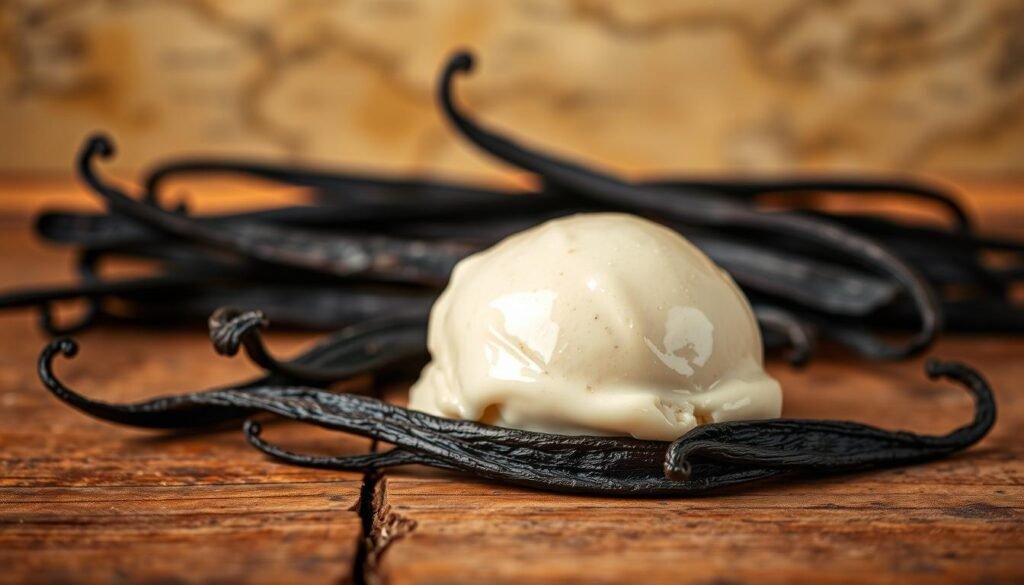
Thomas Jefferson copied a vanilla ice cream recipe in Paris in the 1780s, and that page now sits at the Library of Congress. The French popularized the dessert, and Jefferson brought the recipe to America. Mary Randolph’s The Virginia Housewife (1824) holds the first American vanilla ice cream recipe.
Joseph Burnett made the first commercial extract in Boston in 1847. Coca-Cola went on sale in 1886 with vanilla in the mix. Today vanilla is the top ice cream flavor, chosen by 29 percent of buyers in one industry survey.
The Cultural Echo: Cinema, Music & Modern Table
For a deeper read, the book Eight Flavors by Sarah Lohman follows vanilla into the American kitchen. It shows how a luxury turned into a pantry staple.
The United States is the largest importer, at about 638 million beans a year, or 5.4 grams per person. Yet “plain vanilla” is a synonym for dull. The flavor is anything but: it fills perfumes, sodas and desserts, and its complexity fills the history of vanilla beans.
Bringing the History Home
Start with a small kit of heritage tools and ingredients:
- Whole Bourbon, Tahitian and Mexican beans
- A sharp paring knife
- A small amber jar
- A plain sugar cookie recipe for tasting
Bourbon vanilla tastes sweet and rum-like, Tahitian floral, Indonesian smoky and Mexican spicy and woody. Indonesia supplies about 25 percent of the world’s beans, and Mexico under 5 percent. Squeeze each bean: it should be supple enough to tie around a finger, and silent when the jar is shaken. Avoid extra-large beans.
Then bake the sugar cookie, or an angel food cake, with one bean at a time. Simple recipes let each origin speak, and that sets up why the effort is worth it.
Conclusion
One pod, one morning, one year of labor. Real vanilla carries the work of farmers who still pollinate each flower by hand, and a sacred past that began with the Totonac.
That weight is easy to taste once the flavor stands alone. Every bean holds a world of care that a single molecule cannot match.
Bake a plain cookie, split a Bourbon bean beside a Mexican bean, and taste them side by side this week.