
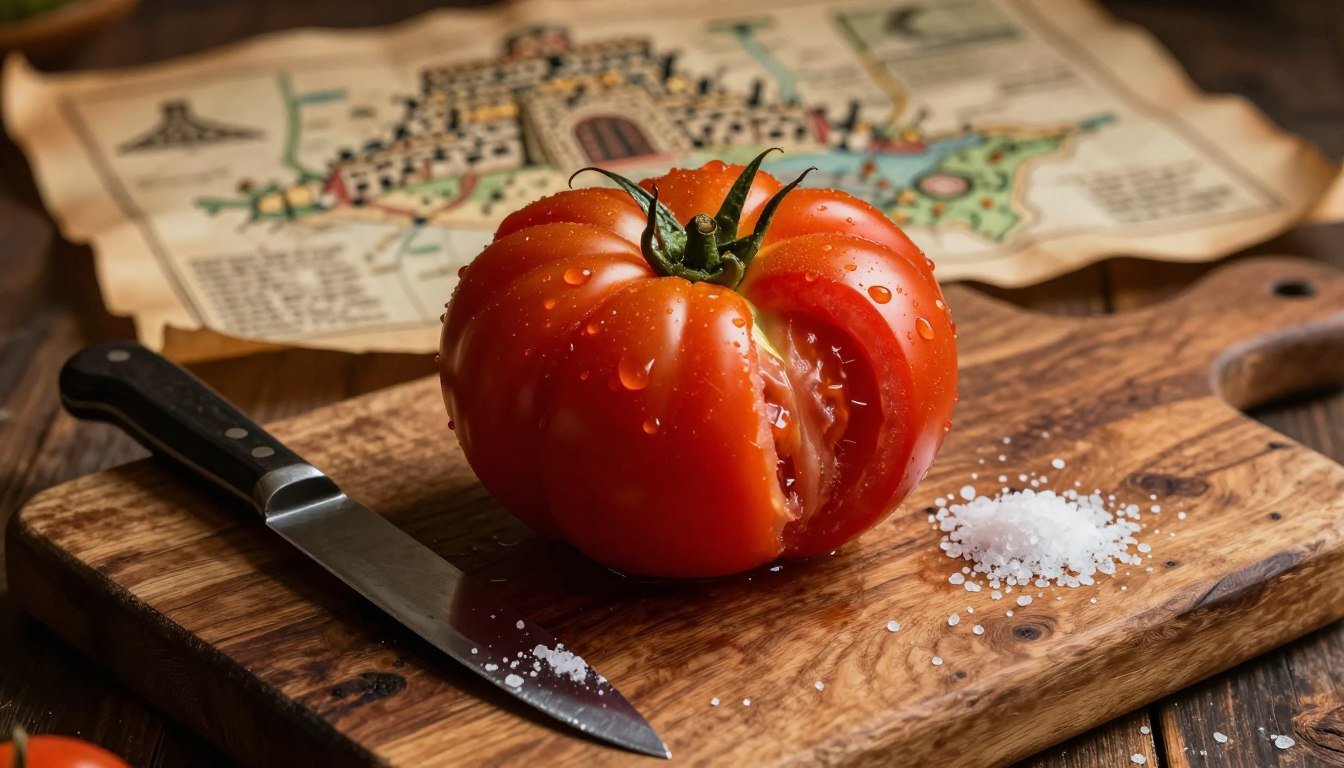
Picture a 16th-century European botanical garden, where rough, foreign soil clings to the roots of a strange red fruit that Indigenous farmers once harvested by hand. Centuries later, a thin-skinned tomato splits under a knife in a summer farmhouse kitchen, and the sound is a soft wet tear. Juice runs across the board, the smell is green and sweet, and a pinch of salt waits beside the blade.
That bruised, deep red fruit carries the history of heirloom tomatoes in every lumpy fold. The “bloody” and the “wars” here are the red juice and the long quarrels over taste and seed, not real battles. A tomato that looks ugly is often the one that tastes best.
The story moves from Aztec gardens to Appalachian radiator shops to modern seed swaps. To understand the flavor on the plate, start where the tomato began.
Key Takeaways
- Tomatoes were first grown by the Aztecs and Incas around 700 AD.
- An heirloom is generally an open-pollinated variety at least 50 years old.
- Many famous varieties, like Mortgage Lifter and Cherokee Purple, started with one person or family.
- After World War II, shipping needs pushed growers toward thick skins and away from flavor.
- Seed savers and seed swaps kept the old varieties alive.
- Never refrigerate a ripe tomato, because cold dulls its flavor.
Tracing the History of Heirloom Tomatoes from Aztec Gardens to American Soil
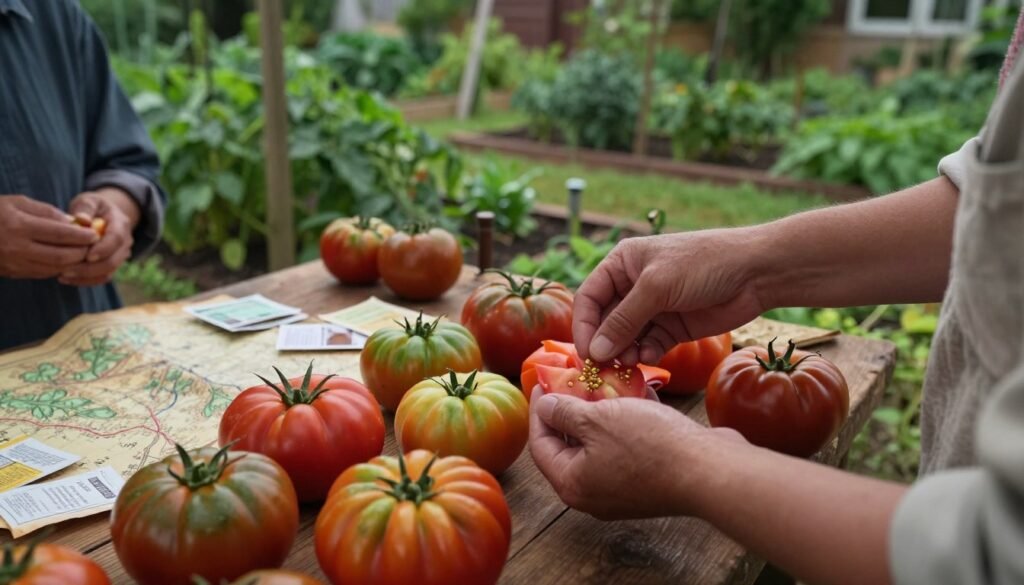
Around 700 AD, the Aztecs in Mexico and the Incas in the Andes were already growing tomatoes in their gardens. In the 16th century, Spanish conquistadors carried the seeds to Europe, and the fruit spread through Spain, Portugal and Italy. By the mid-1800s, tomatoes were a staple of U.S. kitchen gardens.
Immigrants, Native American tribes and local growers kept those tomatoes going by saving seed each season. No company bred these fruits; families and communities did, by saving the best seed year after year. A variety survived only if someone liked its taste enough to plant it again.
No company bred the old tomatoes. Families saved the seed from the fruit they loved best.
Thomas Jefferson anchors the colonial chapter. He grew Purple Calabash and Costoluto Genovese in his garden, at a time when many Americans still eyed the fruit with suspicion.
Gardeners today use the word heirloom for a variety that is generally open-pollinated and at least 50 years old. Open-pollinated means the plants pass the same traits to the next generation when seed is saved. Stricter fans also demand that the variety was handed down in a family or community.
For centuries this inheritance passed from hand to hand without a single factory involved. Then a new kind of farm arrived, and it was about to make most of that inheritance vanish.
Famous Heirloom Varieties and the Stories Behind Their Names
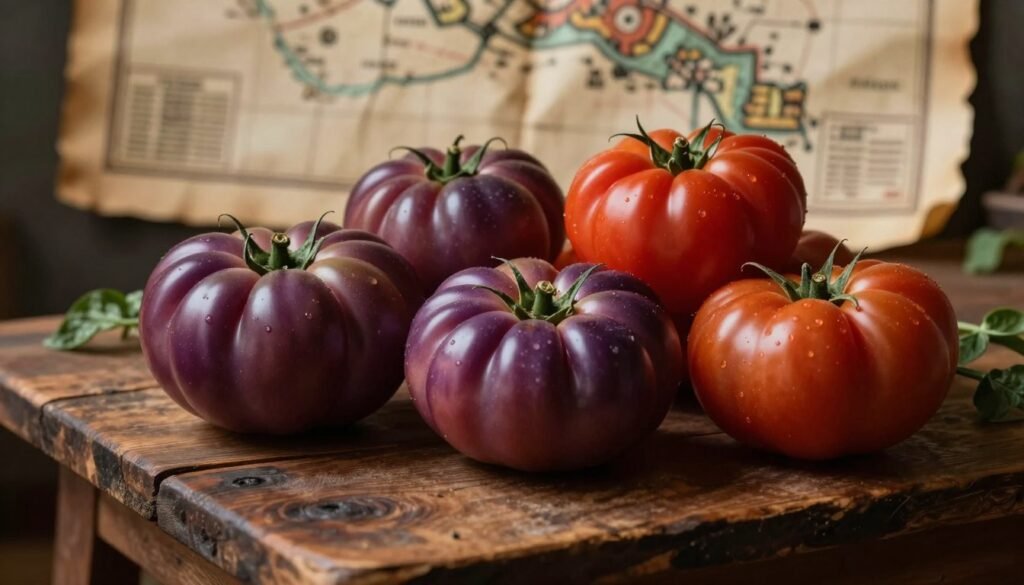
Radiator Charlie was a repair man who paid off a house with tomato plants. His story shows a rule that holds across heirloom tomato varieties: a name often records a place or a person. Heirlooms are local varieties, so even a famous name does not promise the same flavor in every region.
Radiator Charlie’s Mortgage Lifter
In the 1930s, Marshall Cletis “Radiator Charlie” Byles ran a radiator repair shop in Logan, West Virginia. He crossed four of the largest tomatoes he could find. He sold the plants for a dollar each and paid off his mortgage in six years.
Cherokee Purple and the Seed Stranger
Cherokee Purple dates to before 1890. The Cherokee were said to have shared it with a Tennessee gardener. It reached the market in 1991, after J. D. Greene of Sevierville, Tennessee, mailed seeds to North Carolina chemist Craig LeHoullier. It carries a green shoulder and was one of the first popular black tomatoes.
Brandywine, Amish Paste and Other Named Treasures
Brandywine takes its name from Brandywine Creek in Pennsylvania, and its fruits can weigh up to two pounds. Amish Paste is plum-sized and began in an Amish community in Wisconsin.
Striped German may trace to Hampshire County, West Virginia, and Valencia is a family heirloom from Maine. Black Cherry is native to southern Ukraine, and Black Prince came from Siberia. Green Zebra is pale green with dark stripes, sweet and zingy.
| Variety | Origin story | Date or era | Look or flavor |
|---|---|---|---|
| Mortgage Lifter | Radiator Charlie, Logan, West Virginia | 1930s | Huge, meaty fruit |
| Cherokee Purple | Shared by the Cherokee, Tennessee | Before 1890 | Green shoulder, dark color |
| Brandywine | Named for Brandywine Creek, Pennsylvania | 1885 | Up to two pounds |
| Amish Paste | Amish community, Wisconsin | 1870s | Plum-sized |
With stories this good, how did such varieties nearly disappear?
How Supermarket Tomatoes Pushed Heirloom Seeds to the Edge
After World War II, better highways and railroads let produce ship long distances, and the crates of tough red tomatoes began to roll. Commercial growers chose uniformity, thick skins and bruise resistance over flavor. The result was the hybrid tomato, which comes from two distinct parent lines.
Seed saved from a hybrid often fails to breed true or is sterile. An open-pollinated variety was once a hybrid too, stabilized over several years, sometimes more than a dozen. The heirloom meaning, in plain terms, is a tomato you can replant and get the same fruit.
The two sides wanted very different things:
- Shippers: thick skin, uniform color, survival on a long haul
- Gardeners: thin skin, flavor, local fit, seed that can be saved
Heirloom tomatoes are not illegal to grow or sell. They are simply rare in supermarkets because thin skins ship poorly. They crack and bruise more, and they often yield less.
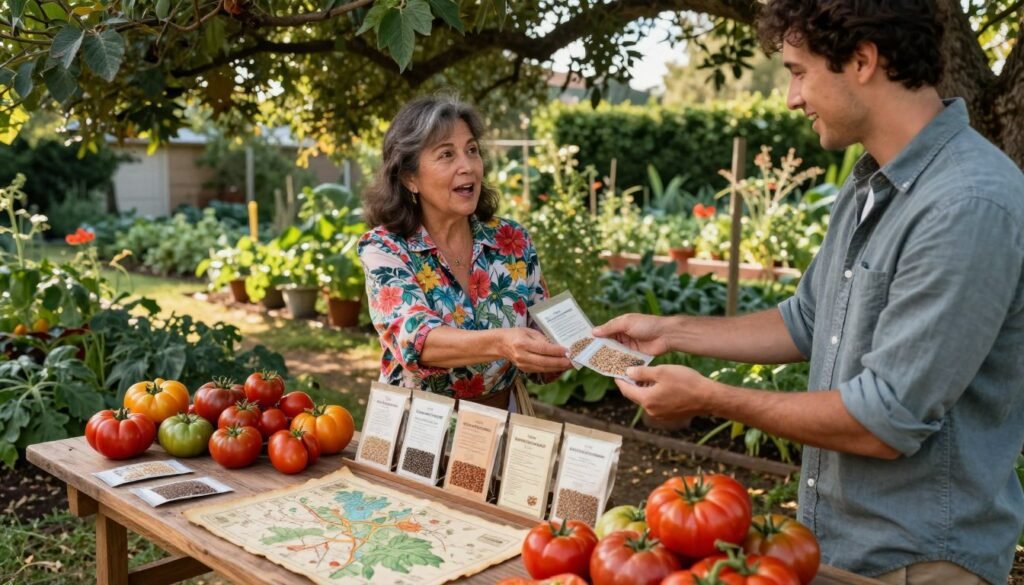
Seed swaps and the Seed Savers Exchange became the rescue. Its yearbook lists about 3,000 open-pollinated varieties, and founder Kent Whealy said only a quarter are true heirlooms, about 750. Slow Food USA’s Ark of Taste, as Food52 reports, lists 17 U.S. tomato varieties at risk.
Gardeners save heirloom seeds from year to year, but saved seed can drift if plants cross. Now that the seed is safe, the flavor can be tasted and used again.
Tasting the Past: Why Heirlooms Still Win at the Table
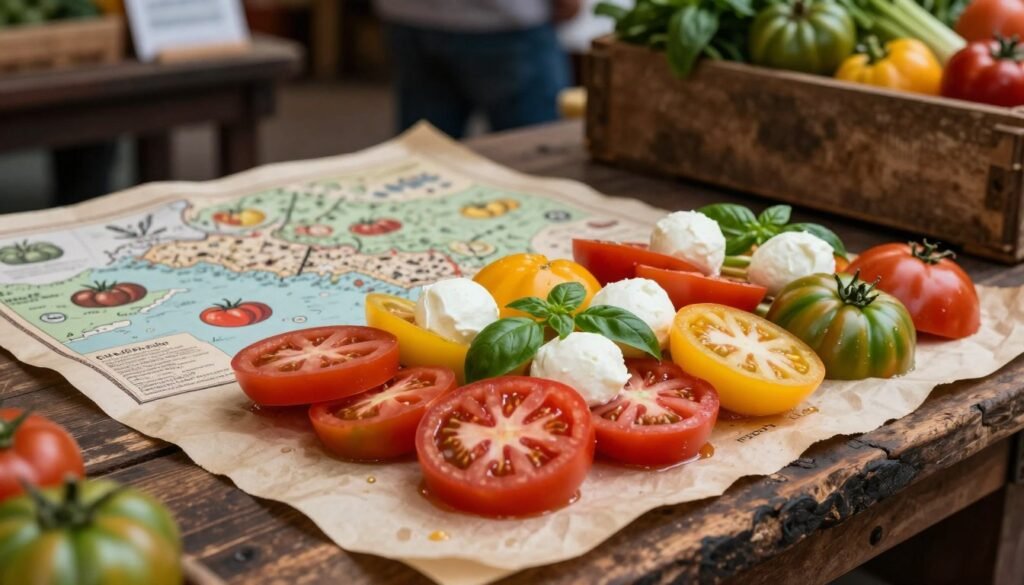
The first bite of a warm, salted slice explains the whole fight. Heirloom tomatoes are generally sweeter, more colorful and often less seedy than hybrids. More leaves per fruit mean more sugars and acids, and that gives the deeper taste. Yellow and orange types are milder and less acidic than red.
The Cultural Echo: Cinema, Music & Modern Table
Guy Clark sang that the only things money cannot buy are true love and homegrown tomatoes. The film Fried Green Tomatoes (1991) gave the fruit a Southern place in American movie culture. Both treat the tomato as a part of home.
At the table, each variety has a job. Brandywine suits slicing, with a balance of sweet and acid. Bonny Best and Abe Lincoln are meaty and favored for salsa. Azoychka is tangy and less acidic for BLTs, and Green Zebra works in pasta salad.
Bringing the History Home
Order seeds from Seed Savers Exchange, then taste before you buy at a farmers’ market, a farm stand or an end-of-summer tasting. Heirlooms look ugly and cost more because they need care. For the simplest tasting, slice one with a paring knife and add mozzarella, basil, olive oil, balsamic and flaky sea salt just before serving.
To roast extras, put halved tomatoes cut side down in a cast iron skillet in a low oven until wrinkled. Never refrigerate a ripe tomato, because the cold dulls its flavor. Keep it on the counter out of direct sun.
That flavor is the inheritance, and it raises one last question about what we owe it.
Conclusion
Each seed is a small handed-down argument for flavor. Heirlooms survived because ordinary people, not companies, saved seed from the tomatoes they loved. Every generation that kept a few seeds kept the argument alive.
The next step is simple. Taste one local heirloom at a farmers’ market this season, then dry its seeds for next year.
Plant one or taste one this summer.