
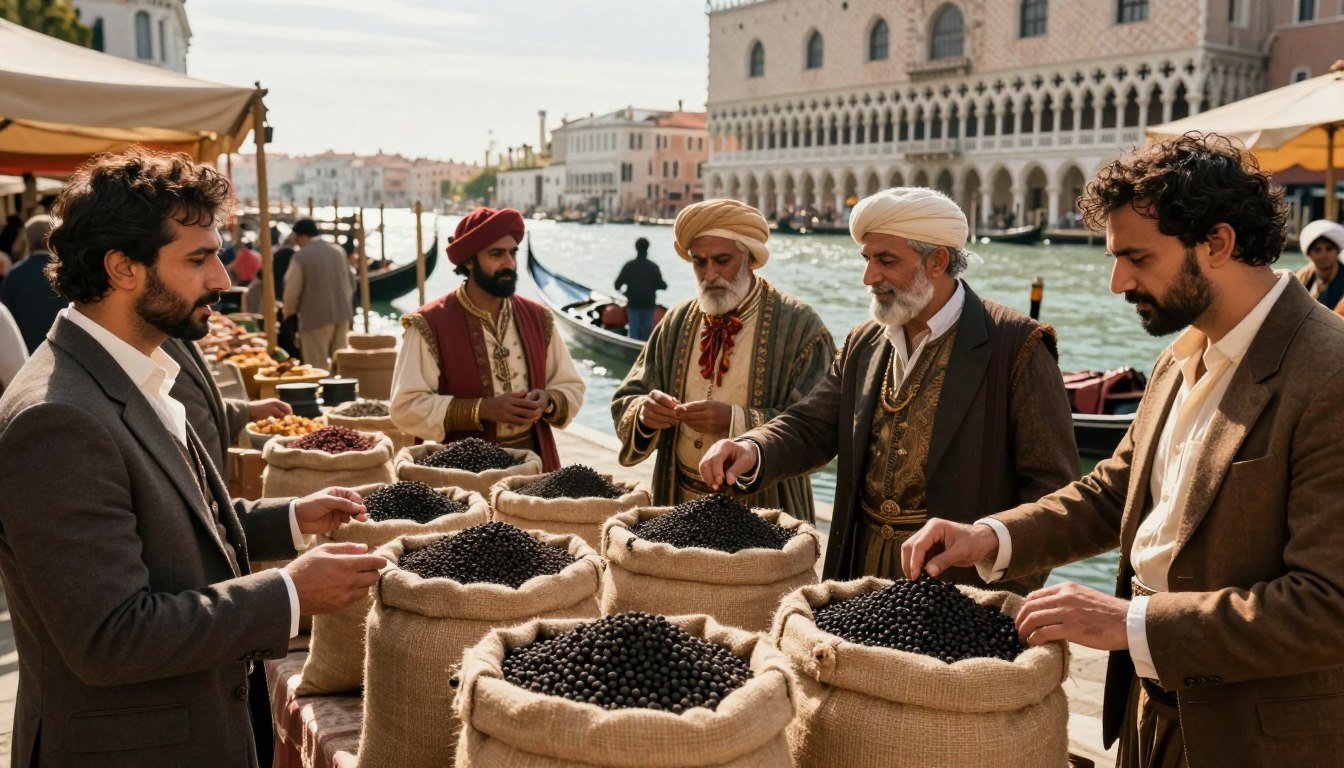
How Peppercorns Built Venice and Triggered the Age of Discovery
A small, costly cargo of black pepper could connect Indian producers, Venetian merchants, and European buyers. Pepper grew on climbing vines, especially along India’s Malabar Coast, and its sharp taste came from piperine, a natural compound in the fruit. In ancient Rome, diners prized pepper, and later Venetian merchants gained great influence in its trade.
Pepper helped build commercial wealth, but it was one part of Venice’s success, not its only source. A trade intermediary is a merchant or port that buys goods in one market and resells them in another. During the Age of Discovery, new direct sea routes shifted trade and enabled conquest and colonization. The story begins with Venice’s lagoon and the maritime community that grew there.
Key Takeaways
- Pepper was a valuable part of Venice’s wider trade.
- Venice grew from communities in a sheltered lagoon.
- Several merchants and ports linked Asian goods with European buyers.
- Portugal’s new sea route changed trade without ending Venice’s role at once.
- Ocean trade brought wealth to Europe and severe harm to many Indigenous peoples.
How Did Venice Take Shape in the Lagoon?
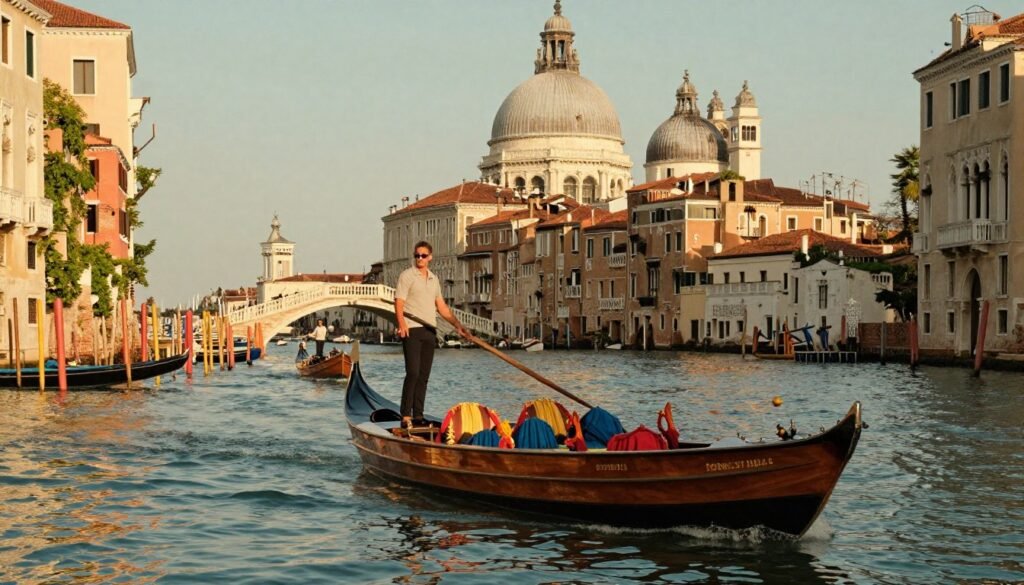
Venice emerged from settlements spread across the lagoon, not from a single act of city planning. Its sheltered waters supported a community that could move goods by boat while keeping a close link to the Adriatic. Its growth came over time through many small settlements and connections.
Venice grew through lagoon communities over time, not through one founding event.
Lagoon communities and the city’s emergence
People lived on islands in the lagoon before Venice became a powerful city. The shallow water and marshes shaped daily life, travel, and building. Local communities relied on boats to cross channels and reach nearby land.
There was no single moment when all these settlements became one planned city. The name Venice came to describe a growing center whose people shared local ties and a widening maritime outlook. Its location helped connect these communities with coastal trade.
From sheltered settlement to maritime port
The lagoon offered some protection from storms and attacks, while passages led toward the open sea. The city could reach Adriatic ports and, through them, Mediterranean markets. As shipping grew, Venice became a port where merchants met, stored goods, and arranged onward sales.
- Lagoon shelter offered safer waters for homes and boats.
- Access to sea routes connected the city with distant ports.
- A position between Adriatic and Mediterranean traffic supported exchange.
These advantages did not guarantee wealth by themselves. Seafaring skill, political choices, and links with other merchants also mattered. The setting made Venice a useful port, and the goods passing through gave that position special value.
Why Did Black Pepper Become So Valuable?
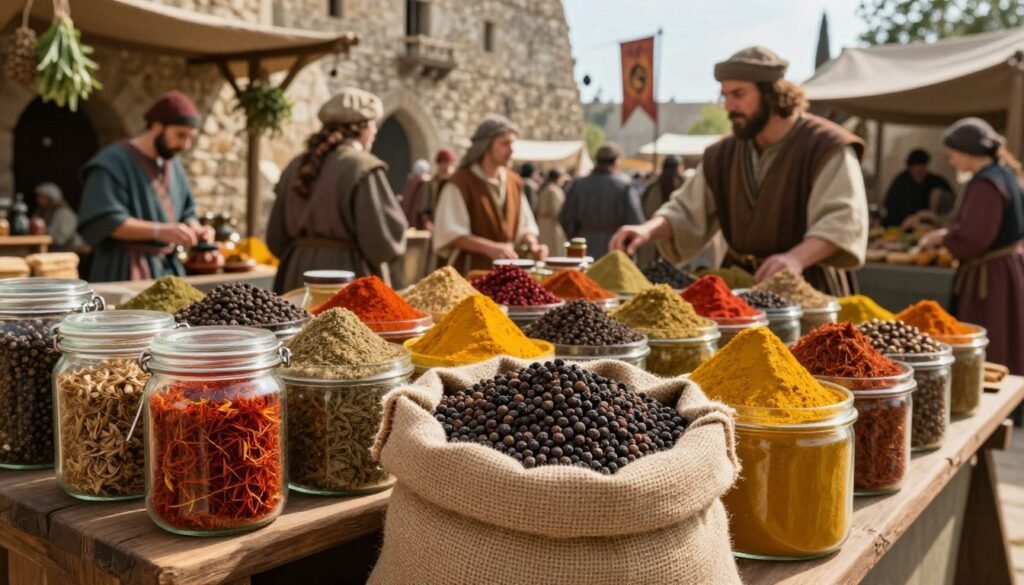
In medieval Europe, black pepper was a costly luxury rather than an everyday seasoning. It held several kinds of value: cooks used it, healers valued it, and buyers treated it as a store or sign of wealth. During the Middle Ages, pepper and other spices were mainly for affluent Europeans.
A luxury with uses beyond seasoning
Black pepper is one spice, while spices are a wider group of plant products with different tastes and uses. Pepper came from the dried fruit of a vine. In the 400s BCE, people linked it with medicine as well as food.
Its role in food was easy to recognize. A small amount could add heat and flavor to a meal. Pepper also traveled well as a dry good, making it suited to long-distance trade.
- Seasoning: pepper gave food a strong, warm taste.
- Medicine: people in the 400s BCE associated pepper with healing.
- Value: pepper could serve as currency or signal wealth.
Scarcity, status, and purchasing power
European buyers depended on a long chain of merchants and ports to obtain pepper. Every handoff added costs and risk before the spice reached a market. That distance helped make it costly, even when the crop was common in its growing region.
Most people in the medieval era could not buy pepper as freely as modern shoppers can. Affluent households could afford it as a mark of status, while others relied on cheaper flavors such as salt. The contrast between its familiar modern place and its earlier scarcity explains why merchants pursued it.
How Did Asian Spices Reach Venice and Europe?
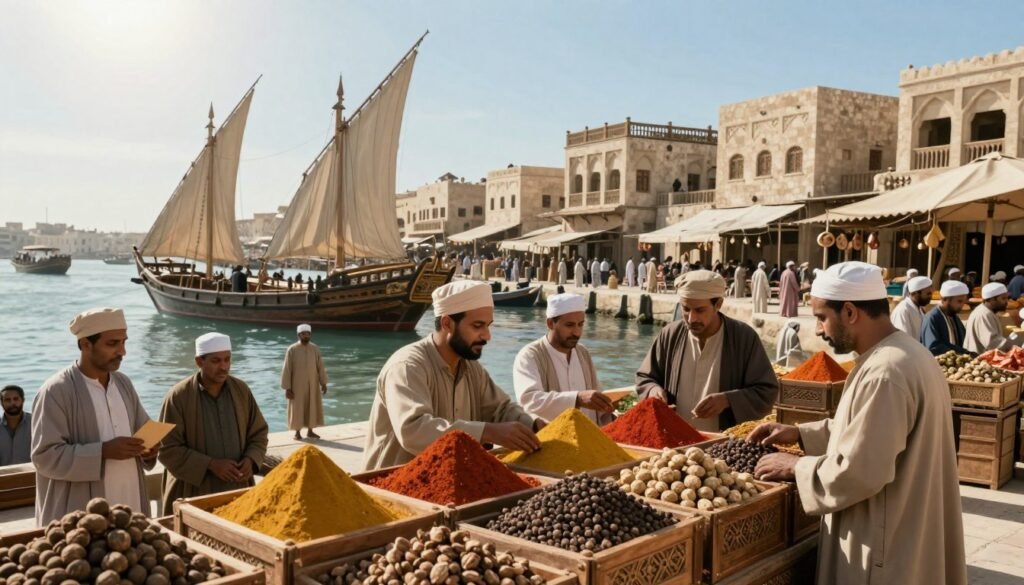
Pepper reached European consumers through a chain of markets, ports, and merchants rather than one direct journey. Many hands helped move spices from Asian growing regions through Indian Ocean and Middle East networks toward the Mediterranean. Venice linked incoming cargo with buyers and sellers across Europe.
The route from Indian producers through the Middle East
Spices grown in Asia first entered regional trade near their places of origin. Ships and merchants moved them through Indian Ocean markets, where cargoes could change hands. Land and sea routes then carried goods through the Middle East toward Mediterranean ports.
The exact path could vary by cargo, season, and merchant. No single trader controlled every leg of the spice trade. Producers, ship owners, port officials, and wholesale dealers each took part in moving goods.
Venice as a European distribution point
Venetian merchants bought cargoes arriving from eastern markets and sold them onward. Venice’s warehouses and harbor helped gather goods for distribution to other European towns. In this way, the city acted as a trade intermediary rather than the sole link between Asia and Europe.
Merchants beyond Venice also shaped prices and access. Other ports received cargo, and buyers across Europe competed for it. The chain made Asian spices available far from where they grew, but each transfer added cost and commercial risk.
That long chain helps explain why a spice’s price could change sharply between its source and its final buyer. The differences reflect stages of sale as well as distance.
What Did Pepper Cost Across the Trade Route?
A late-16th-century comparison shows a steep rise between pepper’s Indian port price and its Venetian retail price. For 100 pounds, the listed cost rose from 3 ducats in Kolkata to 80 ducats in Venice. These figures describe different places and stages of sale.
| Market | Stage of sale | Price per 100 pounds | Period |
|---|---|---|---|
| Kolkata | Export-port price | 3 ducats | Late 16th century |
| Lisbon | Wholesale | 25 ducats | Late 16th century |
| Venice | Retail | 80 ducats | Late 16th century |
The table compares pepper at three points in a trade system. Kolkata’s price was at an export port, Lisbon’s was wholesale, and Venice’s was retail. Each figure reflects a different market and kind of sale.
The numbers do not show one merchant’s profit. Shipping, storage, taxes, losses, and resale could all affect costs along the way. A retail price also includes the work of getting pepper into smaller lots for buyers.
Still, the gap shows why control of ports and trade routes mattered. A city that could buy, store, and resell a sought-after cargo held a valuable position. Commercial stakes of that scale helped drive rivalry between maritime powers.
Why Did Venice and Genoa Compete for the Spice Trade?
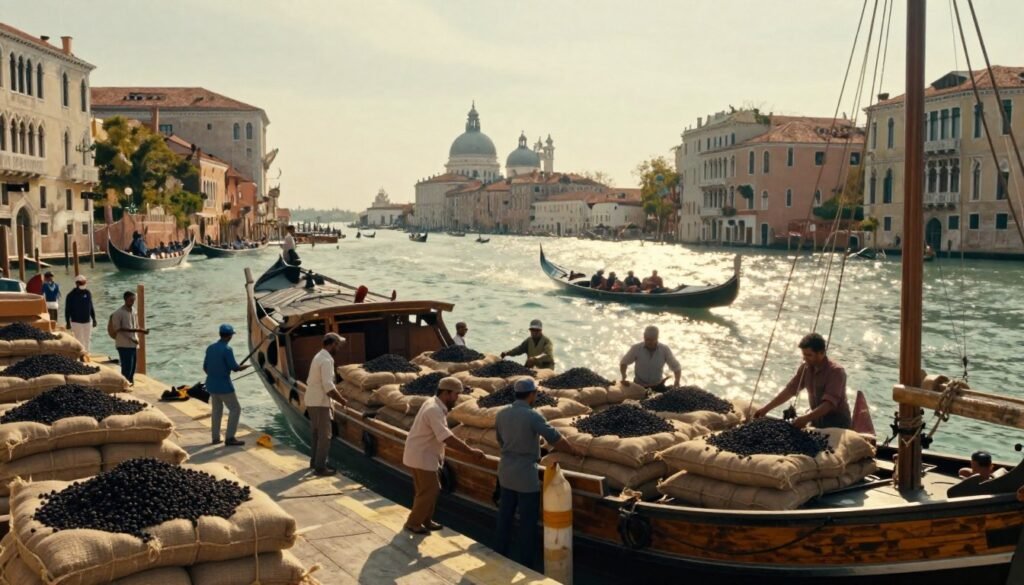
Genoa’s growing naval strength put it in direct competition with Venice for control of profitable commerce. Both maritime powers sought influence over ports and routes carrying valuable goods. Venice won a war against Genoa in the 1300s and secured dominance in the pepper and spice trade.
Two maritime city-states pursue the same market
Venice held a leading place in Mediterranean trade, while Genoa emerged as a naval force during the Middle Ages. Each city had ships, merchants, and interests in connecting distant markets. Influence over a busy port could bring both income and political weight.
Their rivalry was not only about pepper. Competing for sea access meant competing for many goods and for the right to set terms in regional commerce. Their conflict showed how trade and military strength could reinforce each other.
Competition, conflict, and Venetian control
| Power | Maritime position | Relevance to spice competition |
|---|---|---|
| Venice | Leading Mediterranean trading city | Strong role in pepper and spice sales |
| Genoa | Rising naval force and rival | Competed for valuable routes and markets |
| Portugal | Later ocean-going challenger | Entered the established Mediterranean trade contest |
Venice’s victory strengthened its position, but it did not end competition forever. New powers and routes later changed who could reach Asian markets. A monopoly, or near-control of trade, can weaken when competitors gain other ways to reach buyers.
Venice’s wealth and influence rested on a broad commercial system, not on pepper alone. The spice trade mattered because it joined local strengths to distant demand. Those same stakes encouraged European powers to seek new routes.
How Peppercorns Built Venice and Triggered the Age of Discovery
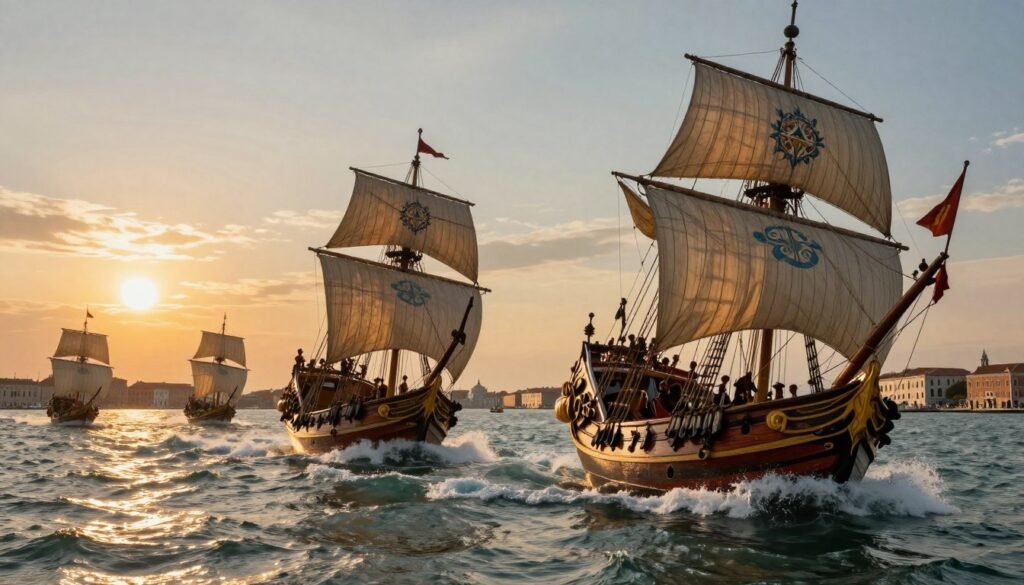
Venice’s importance rested on its ability to handle and redistribute sought-after goods, including pepper. The long chain of sales brought value to merchants and to the state that supported port trade. Pepper helped Venice prosper, but it did not build the city by itself.
Trade wealth strengthened Venice
Goods passing through Venice could be stored, sorted, and resold to other markets. Merchants earned from each stage, while the city gained from its role as a trading center. Pepper was one prized cargo among many, and its high demand made it especially useful to this system.
Venetian influence also depended on shipping, diplomacy, and links with other ports. Commercial wealth could support the city’s power, but it was not the only source of prosperity. The same pattern appeared across Europe, where rulers sought access to goods and wealth.
Why Europe sought a way around the middlemen
Some European powers wanted access to Asian goods without relying on established intermediaries. Their ambitions included spices and broader wealth such as gold and silver. Bypassing middlemen was one motive, not the sole cause of exploration.
- Demand for luxury goods encouraged merchants to seek supply.
- Competition over trade access pushed states to seek influence.
- Interest in new maritime routes encouraged long voyages.
These factors overlapped with state rivalries, hopes for wealth, and advances in sailing. A desire to reach markets directly mattered, but no single commodity explains the Age of Discovery. Portugal’s attempt to reach Asian markets by sailing around Africa put that ambition into action.
How Did Portugal Route Around the Cape of Good Hope?
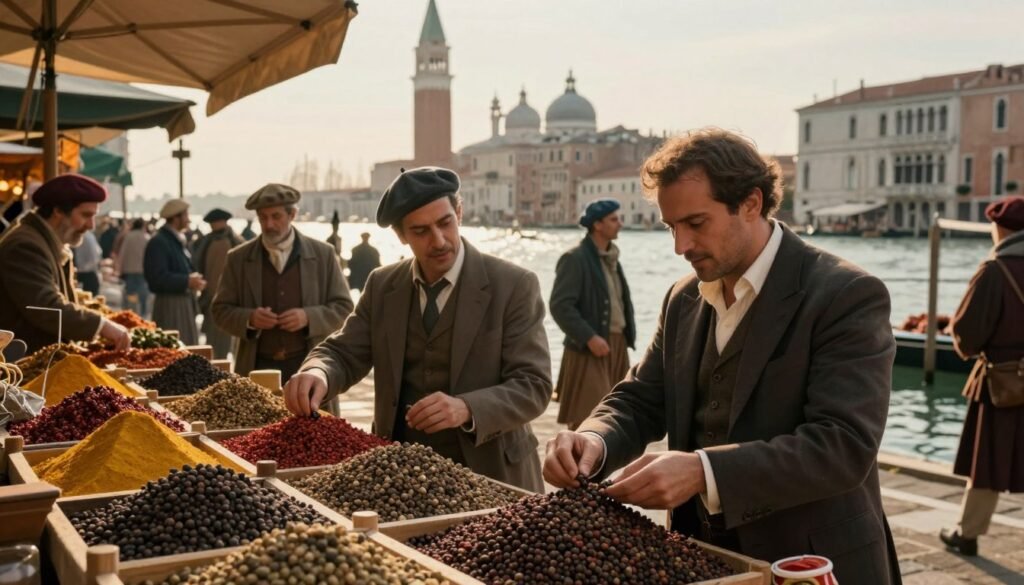
Portuguese sailors reached India by following Africa’s coast and rounding its southern tip. The Cape of Good Hope opened a path from the Atlantic into the Indian Ocean. In 1498, Vasco da Gama reached India by sea, giving Portugal direct access to Asian markets.
Following the African coast toward the Indian Ocean
Portuguese voyages along the African coast built knowledge of the route south. Sailors had to navigate unfamiliar waters and round the Cape before turning toward the Indian Ocean. The effort linked Atlantic sailing with a sea route to India.
This route offered a way to compete for the spice trade without following the older flow of goods across land and regional seas. Portugal sought spices as well as riches such as gold and silver. Direct access gave the kingdom a stronger position in maritime commerce.
Vasco da Gama reaches India by sea
Da Gama’s arrival in India in 1498 marked a major shift in European access to Asian markets. It did not instantly erase Venice’s role or stop older trade routes. Established merchants continued to serve buyers as new ocean trade grew.
A new route changes the choices available to traders, but its effects unfold over time. Portuguese ships could now carry Asian goods toward Europe by sea. This eastern passage differed from Christopher Columbus’s plan to reach Asian markets by sailing west.
Why Did Christopher Columbus Sail West?
Christopher Columbus proposed reaching the Indies by sailing west, not by following the established route around Africa. In 1492, Spain sponsored his Atlantic voyage as he sought a westward passage to valuable trade. His voyage did not reach India.
Columbus believed a westward route could connect Spain to Asian markets. His plan reflected European interest in access to goods, including pepper and other valuable cargo. It offered a different approach from Portugal’s efforts along Africa.
Instead of arriving in Asia, Columbus encountered lands in the Americas unknown to Europeans at the time. Those lands were already home to Indigenous societies. The voyage redirected European expansion rather than delivering the hoped-for passage to Asia.
Spanish voyages that followed brought lasting change to the Americas. European states sought wealth and control, while Indigenous peoples faced invasion and loss. The consequences went far beyond a failed route to Asian markets.
Columbus’s voyage is one part of a longer period of overseas exploration. European powers crossed oceans, claimed territory, and formed trade links that reshaped relations among regions. That larger period is often called the Age of Discovery.
What Does the Age of Discovery Include?
Historians generally use the Age of Discovery for the long era of European overseas exploration from the early 15th to the mid-17th century. A broad date range is about 1418 to 1620. The period expanded global trade, but its name reflects a European point of view.
European voyages across the Atlantic and Indian Oceans
European explorers crossed the Atlantic and Indian Oceans, and later reached the Pacific. Their voyages opened new sea routes and widened connections between regions. The era overlapped with the Age of Sail, when sailing ships drove long-distance travel and commerce.
The term discovery can hide an important fact: the lands Europeans encountered were already inhabited. Indigenous communities had their own histories, governments, and trade networks. European arrival did not mean those places were empty or unknown to their residents.
From exploration to connected world systems
Exploration helped expand global trade and tied markets together across oceans. It also led to colonization, conquest, and new power relationships between regions. Goods, people, and ideas moved farther, often under unequal conditions.
The era was not a single event or a shared experience. European states gained routes and wealth, while many communities faced forced rule and loss. A careful account treats maritime change and its human costs as connected parts of history.
The broad period becomes clearer through a few voyages and agreements. They changed European access to the Atlantic, Indian, and Pacific routes. Their effects shaped trade long after the ships returned home.
Which Voyages Changed Europe’s Sea Routes?
Several landmark voyages and agreements turned the pursuit of new routes into a wider contest over overseas access. Together, they connected Europe with the Americas, India, and Asia across several oceans. The milestones span 1492 to the opening of the Manila galleon trade in 1565.
| Date | Event | Principal power or leaders | Significance |
|---|---|---|---|
| 1492 | Columbus’s Atlantic voyage | Spain and Columbus | European arrival in the Americas |
| 1494 | Treaty of Tordesillas | Spain and Portugal | Division of overseas claims |
| 1498 | Da Gama reaches India by sea | Portugal and Vasco da Gama | Direct maritime access to India |
| 1519-1522 | First circumnavigation | Magellan’s expedition, completed by Elcano | Global voyage |
| 1565 | Manila galleon trade opens | Spanish Empire | Americas linked with Asia across the Pacific |
The Treaty of Tordesillas, signed in 1494, set a line for Spanish and Portuguese overseas claims. It did not settle every later dispute. European states continued to compete for land and routes.
The first circumnavigation lasted from 1519 to 1522. Ferdinand Magellan led the expedition at first, and Juan Sebastián Elcano completed it. In 1565, the Manila galleon trade connected the Americas and Asia across the Pacific.
These milestones widened Europe’s sea routes and helped form larger trading systems. They also marked the start of deeper overseas control. The routes themselves are only part of the story; their effects on people and territories matter too.
How Did Ottoman and Northern European Powers Challenge Venice?
Venice faced competition not only from a new ocean route but also from powers contesting its regional influence. The Ottoman Empire challenged Venetian access to regional trade routes during the 16th century. French, Dutch, and English traders later weakened Venice’s monopoly over time.
Ottoman influence in the eastern Mediterranean
Ottoman power grew across parts of the eastern Mediterranean, where routes and ports mattered to Venetian commerce. This competition affected the regional links that had supported Venice’s role in trade. Venice had to work within a changing balance of power.
Portugal offered another kind of challenge. Its direct ocean route around Africa gave European traders a way to reach Asian markets by sea. That route increased competition without instantly ending older Mediterranean commerce.
New European competitors enter the trade
| Challenger | Period | Challenge to Venice |
|---|---|---|
| Portugal | Late 15th century onward | Direct route around Africa |
| Ottoman Empire | 16th century | Influence over regional routes |
| French, Dutch, and English | Later years | Competing trade weakened Venetian control |
French, Dutch, and English merchants entered markets once shaped more strongly by Venice. Their activity eroded Venetian control as trade expanded across the oceans. The change took time, rather than arriving in a single year.
Competition among states affected merchants, but ocean expansion also changed the lives of people in distant lands. European powers did not simply add new routes to an existing map. Their expansion often brought force and lasting harm to Indigenous communities.
What Did Overseas Expansion Mean for Indigenous Peoples?
The opening of ocean routes brought devastating changes for many Indigenous communities, not just new trading opportunities for Europeans. Conquest and disease caused immense harm across the Americas. European colonization often meant loss of land, political control, and lives.
Conquest and loss of political control
European forces claimed territory and challenged Indigenous governments. Communities lost land and sovereignty, while many people faced forced labor or enslavement. These actions were not side effects of peaceful trade; they relied on unequal power and coercion.
Communicable diseases spread through new contact between populations. Indigenous people had little protection against some illnesses brought from Europe and elsewhere. Disease caused severe losses and weakened communities already facing violence and upheaval.
Disease, enslavement, and cultural exchange
- Loss of land and sovereignty under foreign rule.
- Forced labor and enslavement of Indigenous people.
- Disease that spread through newly connected populations.
- Ecological and cultural exchange across the oceans.
The Columbian exchange moved plants, animals, people, and cultural practices between the Americas and the Old World. Some exchanges changed diets and daily life on both sides of the Atlantic. They took place alongside conquest, forced movement, and unequal rule.
Trade carried goods across oceans, but it did not make the system fair. The circulation of cargo and wealth grew in a world shaped by violence and control. Those unequal encounters formed part of the wider movement of goods across the seas.
How Did Silver and Sea Routes Knit Together Global Trade?
Ocean routes joined markets that had previously traded through more limited connections. Silver from the Americas circulated through growing intercontinental trade, while Asian goods, including spices, moved through linked maritime markets. Atlantic, Indian Ocean, and Pacific routes formed overlapping networks.
| Route | Main connection | What it linked |
|---|---|---|
| Atlantic | Europe and the Americas | People and goods between the two regions |
| Indian Ocean | East Africa, the Middle East, and Asia | Asian goods and European maritime trade |
| Pacific | The Americas and Asia | Transoceanic exchange tied to Manila galleons |
Silver from the Americas became part of this wider system. It crossed oceans and entered trade with Asian markets. Goods moved in more than one direction, and different ports linked parts of the network.
In the Indian Ocean, East Africa, the Middle East, and Asia took part in long-standing exchange. European ships entered these markets and added new links. In the Pacific, the Manila galleon network connected the Americas with Asia.
No single cargo captures the scale of the emerging global economy. Routes overlapped, and each carried many goods and people. The system joined distant markets, though its profits and harms fell unevenly across societies.
Venice had once profited from its place between eastern goods and European buyers. As ocean networks grew, that advantage faced stronger competition. The city’s former commercial dominance then faded over time.
What Led to Venice’s Loss of Trade Dominance?
Venice’s hold over the spice trade weakened over time rather than disappearing in one event. New routes and rivals changed access to Asian goods and reshaped commercial power. The Venetian Republic ended in 1797, long after its trade dominance began to fade.
New routes and shifting commercial power
Portuguese ships brought a new way to reach Asian markets. Ottoman influence also challenged Venice’s regional position. Later, French, Dutch, and English traders entered the trade and competed for buyers and routes.
Venice did not lose every part of its commerce at once. Its advantage eroded as rival powers built their own networks and access to sea routes changed. The loss of a monopoly in one trade was part of a wider shift in influence.
The difference between commercial decline and political end
The Venetian Republic’s political end came in 1797. That date is separate from the gradual weakening of its spice-trade dominance. A city can lose a leading place in commerce long before its political system ends.
Venice’s fall, in this sense, was a long loss of commercial power rather than a single collapse. New routes and competitors reduced the city’s place in trade. The republic’s end marked a later political turning point, not the moment pepper sales stopped.
That history gives black pepper a changing role: once a prized cargo, it is now a common food seasoning in many places. Its modern trade reflects a very different world economy.
Where Does Black Pepper Fit in Trade Today?
A spice that once marked wealth is now a familiar part of American kitchens and global commerce. Black pepper travels through a large trade network and is common in the United States. It is grown in countries including India, Vietnam, China, Indonesia, and Brazil.
A familiar seasoning with a global supply
Black pepper no longer carries the same luxury status it held in medieval Europe. Farms in several regions supply markets around the world. The trade links growers, processors, shippers, and food sellers across long distances.
India, Vietnam, China, Indonesia, and Brazil are among the countries where black pepper grows. These places are part of a larger supply, not a single source for every market. A familiar pepper shaker can therefore represent many stages of global trade.
True peppercorns and other plants called pepper
Black, white, and green peppercorns come from the same pepper plant, though they are processed differently. Red “peppercorns” and Sichuan “peppercorns” come from other plants. The shared name does not mean they have the same botanical source.
- Black pepper: dried fruit from the true pepper plant.
- White pepper: the same plant, with a different processing method.
- Green pepper: the same plant, picked and preserved differently.
- Sichuan pepper: a different plant, despite its familiar name.
Names on a package can cover more than one kind of plant. Knowing the difference helps explain why these seasonings taste and behave differently. Pepper’s move from a Venetian luxury to an everyday seasoning reflects the shift from intermediaries to connected ocean trade.
Black pepper moved from a costly cargo in Venetian commerce to a familiar seasoning in an interconnected world.
Conclusion
Pepper’s history shows how a valuable commodity can help redirect trade and political ambition. It helped make Venice an important trading power, but it was one part of a much wider commercial system. Venetian merchants prospered by connecting goods, ports, and buyers.
The search for new trade routes differed from the colonial consequences that followed. Ocean travel opened new links, while conquest and unequal rule harmed many Indigenous communities. Both belong in the history of expanding trade.
Compare the Cape route with Columbus’s Atlantic route on a map. Trace where each led, then consider who gained power from those connections.