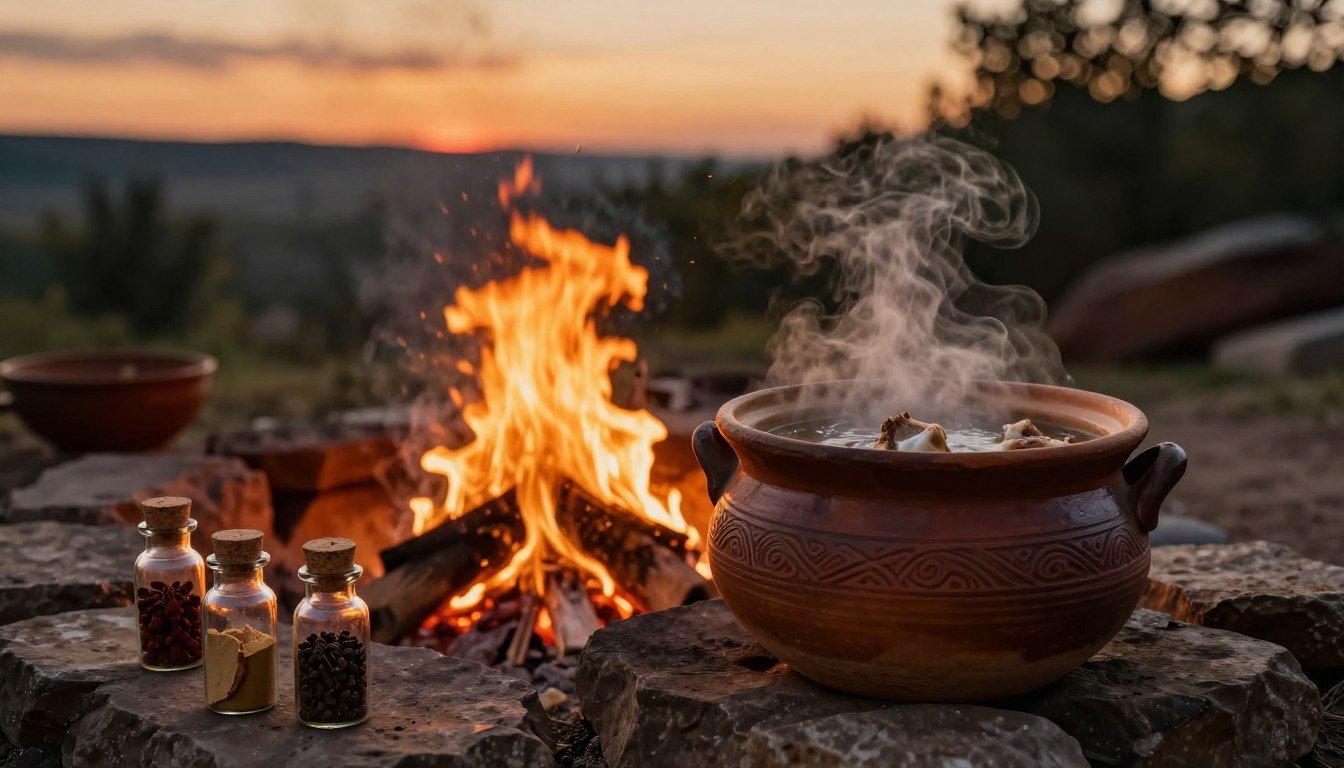
In a healer’s chamber in ancient China, the sharp scent of crushed herbs hangs in the air while monks tend a pot of bone broth. Long before that room existed, smoke curled up from a prehistoric fire at dusk. Bones cracked, steam smelled of marrow, and a pot of simmering water never left the heat.
The history of bone broth runs through the hearth of nearly every people on earth. This is the trail of one pot across cultures and centuries: from the first fires, through ships and expeditions, to the modern kitchen. It begins with the first cooks who turned leftover bones into food.
Key Takeaways
- Bone broth began with hunters who wasted no part of an animal.
- Traditional Chinese Medicine and Hippocrates used it as medicine.
- Portable soup, a dry cake, fed sailors and explorers.
- France, Spain, Italy, Japan and the Caribbean each gave it a local name.
- Liebig’s work led to the bouillon cube in the 1800s.
- Paleo and keto eating brought slow simmering back.
- A good home pot needs roasted bones, a low simmer and time.
The History of Bone Broth From Hunter-Gatherer Fires to Ancient Healers

Where bone broth originated is simple to say: in the earliest hunting camps, where hunters refused to waste any part of an animal. They simmered bones, hooves and connective tissue, because every scrap meant food. The dates for the earliest broth are estimates, since soft broth leaves almost no trace.
Early people first cracked or baked bones to reach the marrow. Before pottery, some cultures used an animal’s stomach as a pot and dropped heated stones into it. Pottery arrived roughly 15,000-20,000 BC, and a clay pot let cooks hold water at a gentle heat for hours.
Broth began as a way to waste nothing, and slow simmering in water gave cooks far more than the marrow alone.
Simmering in water pulls collagen and minerals out of the bones. Healers noticed that the broth seemed to restore people. In Traditional Chinese Medicine it was used for more than 2,500 years to support the kidneys, digestion and “Jing”, the essence tied to growth.
Hippocrates recommended it for digestive trouble and cleansing. A South American proverb goes further and says a good broth can resurrect the dead. A food this useful soon outgrew its camps and began to travel.
How Broth Traveled With Cooks, Sailors and Explorers

A broth could be boiled until it turned into a hard cake, and that trick made it *portable*. Portable soup was a broth boiled down until it set into a hard, dry cake that dissolved again in hot water. Cooks had learned to carry a whole pot in a pocket.
Portable Soup on Ships and Expeditions
Medieval European kitchens relied on stock to stretch scarce food, and monastery kitchens refined slow cooking. In 16th century France, establishments called “restaurants”, meaning restoratives, served broth to cure exhaustion. The word later named the dining rooms we know today.
Portable soup was a thin, light dry cake that revived in hot water. The British Navy issued it as a standard ration, credited with helping against scurvy. Lewis and Clark carried it across North America, and the history of bone broth in America starts from that expedition.
It was a ration, so it was far more concentrated and plain than a sipping broth. Think of beef boiled down for a long century of sea travel, not a bowl for a quiet evening.
One Broth, Many Names Across Continents
In the 12th century, physician Maimonides prescribed chicken soup, calling it excellent food and medication. It was later nicknamed “Jewish penicillin”. Each region then gave its soup a local identity, and Asian broths often use herbs and roots.
| Place | Local name | Typical dish or use |
|---|---|---|
| France | Bouillon | Clear restorative broth |
| Spain and Portugal | Caldo | Base for soups and stews |
| Italy | Brodo | Broth for soups |
| Japan | Osumashi | Ramen base |
| Caribbean | Cow foot soup | Eaten for breakfast |
Korea has Gomtang, and Japanese ramen rests on a bone broth base. So what happened once chemists and factories took over the kettle?
From Bouillon Cubes to Today’s Revival
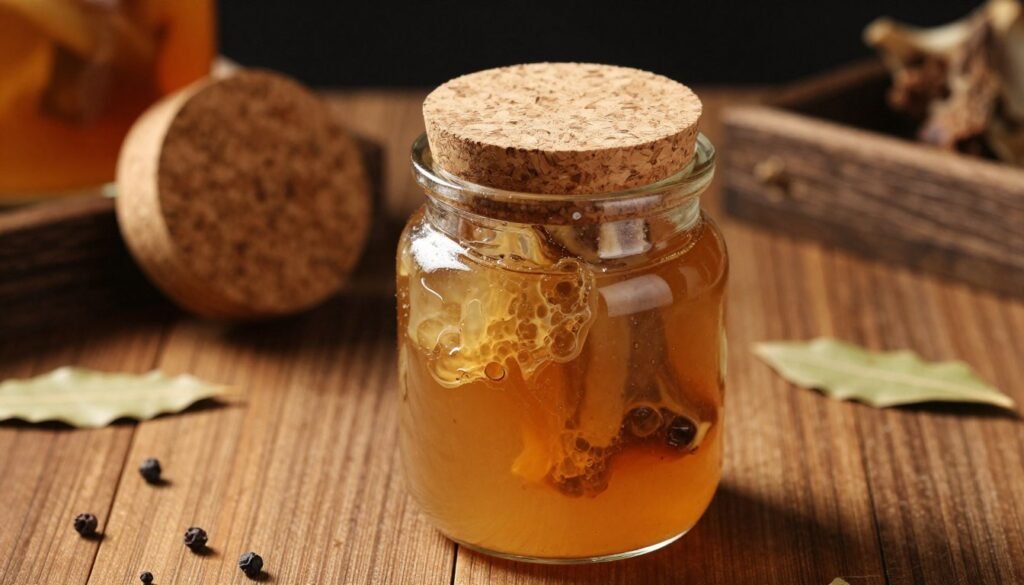
A German chemist, Justus von Liebig, helped turn broth into a cube. In the early 1800s a method for pulling pure gelatin from bones was developed, and Liebig studied the nutrition of broth. His work led to beef extract and the bouillon cubes that sat in pantries for generations.
MSG arrived in 1908 and entered commercial broths. In the 20th century, canned and powdered broths and fast food pushed home simmering aside. Paleo, keto and Whole30 eating then revived slow-simmered bone broth.
Bone broth benefits are commonly cited for joints, gut and skin, though they vary by recipe. Broth contains glycine, proline, collagen, glucosamine and chondroitin. You can drink bone broth every day for a month as part of a normal diet, but it is food, not medicine, so people with health conditions should ask a doctor.
Bone broth is food, not medicine, and anyone with a health condition should ask a doctor first.
The Cultural Echo: Cinema, Music & Modern Table
The film Tampopo (1985, Juzo Itami) is a Japanese comedy about the quest for a perfect ramen broth. It shows how much devotion one pot can hold. Pair it with a cookbook on classic stocks or a food documentary, and the history comes alive.
Music fits too, in a general way: the sounds of a simmering kitchen, a lid rattling and a spoon on the pot, make their own quiet rhythm. For more on food history, the Library of Congress at loc.gov holds a wide archive.
Bringing the History Home
A bone broth recipe in outline starts with roasted beef knuckle and marrow bones or a chicken carcass. Add root vegetables, herbs and peppercorns, cover with water and add a splash of vinegar. Hold a low simmer for many hours; chicken bone broth usually needs fewer hours than beef bone broth. A hard boil clouds the broth, and a poorly set broth means too much water.
Heritage tools keep the method simple:
- A heavy stockpot or enameled Dutch oven
- A fine-mesh strainer
- Roasted bones
- Herbs and peppercorns
- A jar for storing
Memory fills the kitchen with the same steam the first cooks knew.
Conclusion
One pot has outlasted every kitchen it passed through. Bone broth survives because it wastes nothing, and each place that adopted it left its own name on the history of the dish.
The story is easy to taste. Simmer a pot this weekend, and notice what the kitchen smells like.