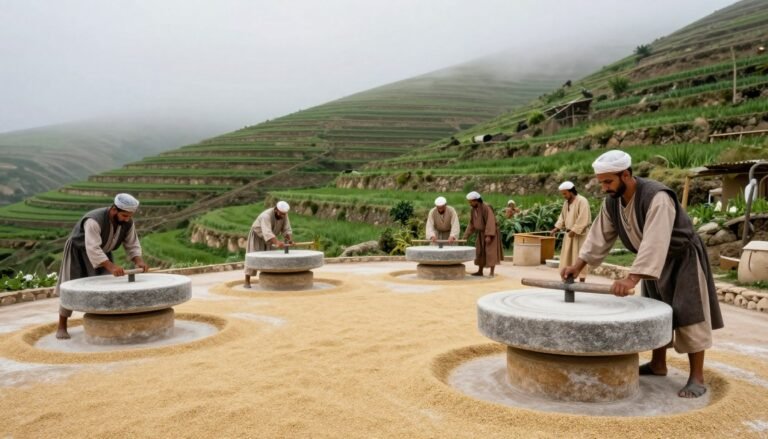
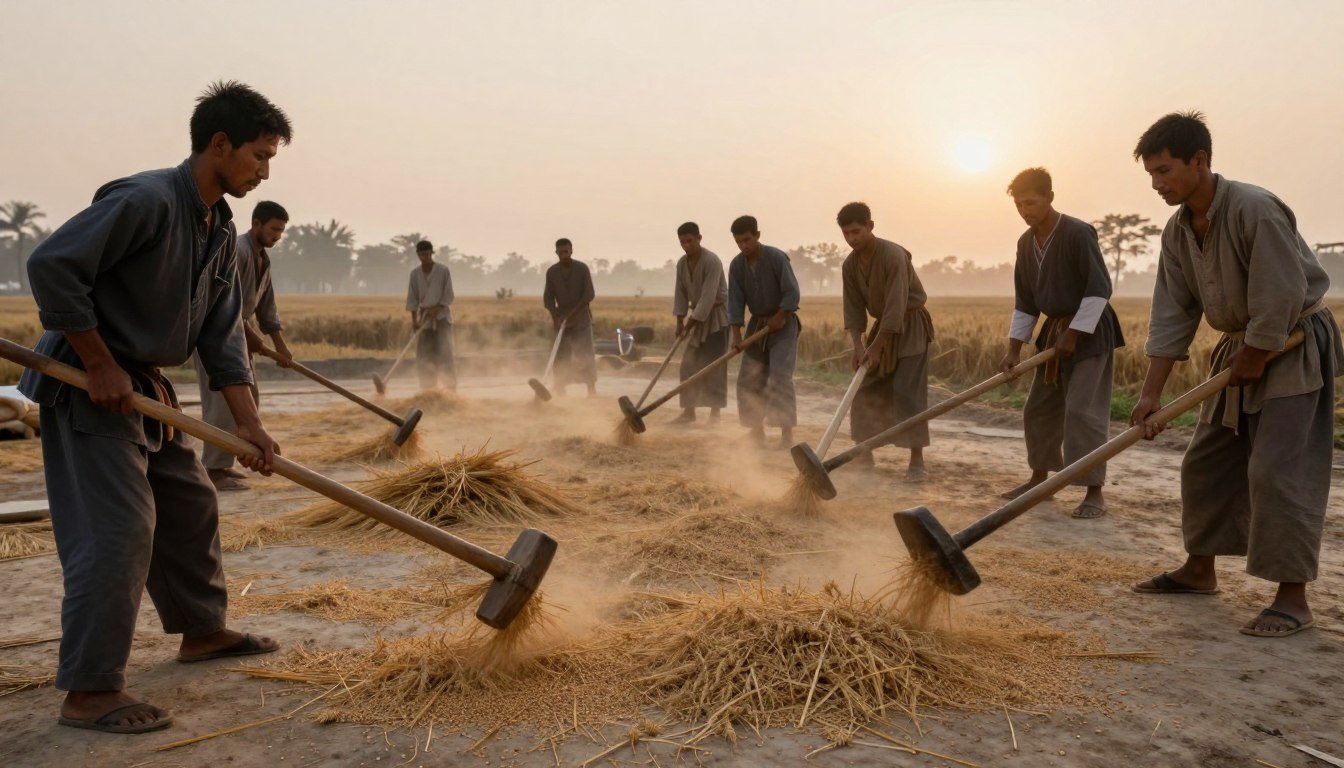
Dawn light silvered the dust above a Neolithic village as wooden flails struck the threshing floor. Smoke from drying fires moved over stacked sheaves, while sickles rasped through the last stalks. In that scene, the history of emmer wheat was already written in hunger, labor and the fragile promise of winter food.
The struggle over emmer was never simply about flavor. It concerned harvests, storage, land and the people who controlled grain when weather failed. This husked wheat became part of the political history of early farming societies, feeding households, armies and states before modern wheat pushed it aside.
Archaeological evidence preserved by institutions such as the Smithsonian helps place this ancient grain within the longer story of domesticated agriculture. Why did people keep returning to emmer for thousands of years—and why did its protective husk eventually become a burden?
Key Takeaways
- Emmer is a hulled wheat and an early farmed grain.
- Egypt used it for bread and beer, while Rome valued it as farro.
- Its husk protected stored grain but increased processing work.
- Free-threshing wheat gained ground through labor efficiency.
- Emmer helped shape durum and bread wheat.
- Emmer contains gluten and is unsafe for people with celiac disease.
- Farmers still value it for resilience and genetic diversity.
The History of Emmer Wheat From Wild Grass to First Crop
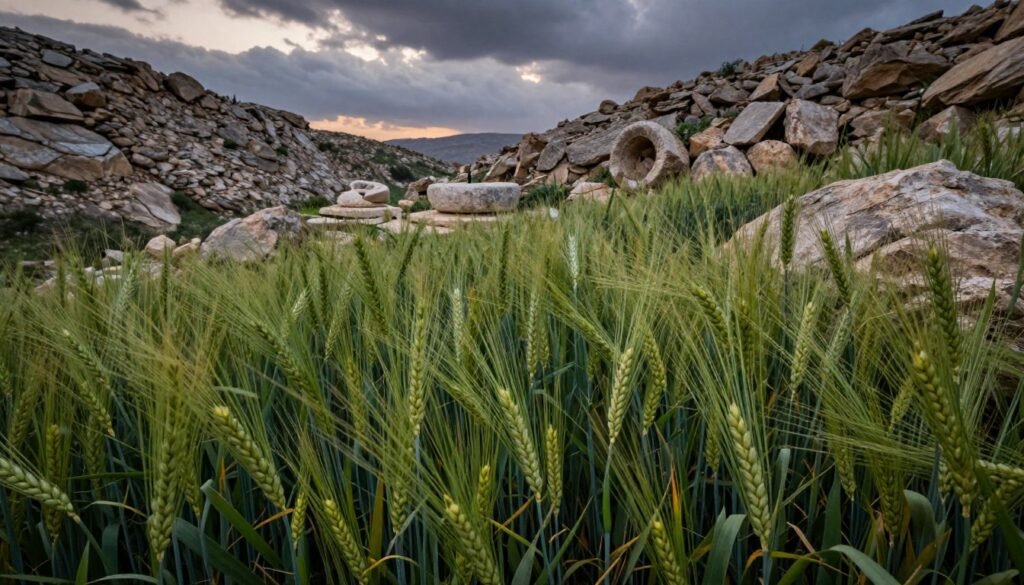
The Fertile Crescent—especially the Levant and southeastern Anatolia—was the stage for the first chapters in the history of emmer wheat. Archaeological evidence places early cultivation of emmer among the first farming experiments, roughly 10,000 years ago, around 9700 BCE. Einkorn may have been cultivated earlier in some places, so the title of “first grain” remains debated rather than settled.
People gathered wild emmer long before they planted it. Archaeologists have found wild emmer remains at sites dating as far back as 17,000 BC, where foragers collected the grain from natural stands. Wild emmer still grows in parts of the eastern Mediterranean today, linking modern landscapes to the earliest agriculture.
The decisive change appeared in the seed head. Wild plants shatter when ripe, scattering their grains before a harvester can gather them; domesticated emmer held its seed head intact. That small botanical difference turned a wandering grass into a dependable wheat crop and made organized farming possible.
When the seed head stopped shattering, a harvest became something a family could count on.
Emmer is a hulled wheat, meaning each grain remains enclosed in a stubborn husk after threshing. The husk shielded the grain from pests and moisture during storage, but it also demanded dehulling before milling or cooking. This balance—protection in the granary, extra labor at the mill—helped determine emmer’s place in early agriculture.
Domestication did not arrive as a single discovery. It unfolded through repeated planting, harvesting and selection, while regional forms of emmer emerged in response to climate, soil and local farming practice. Over generations, this resilient species moved from wild grass to stored food, helping prepare the way for cities, taxation and state-controlled grain reserves.
How Emmer Fed Egypt, Rome and Early Europe
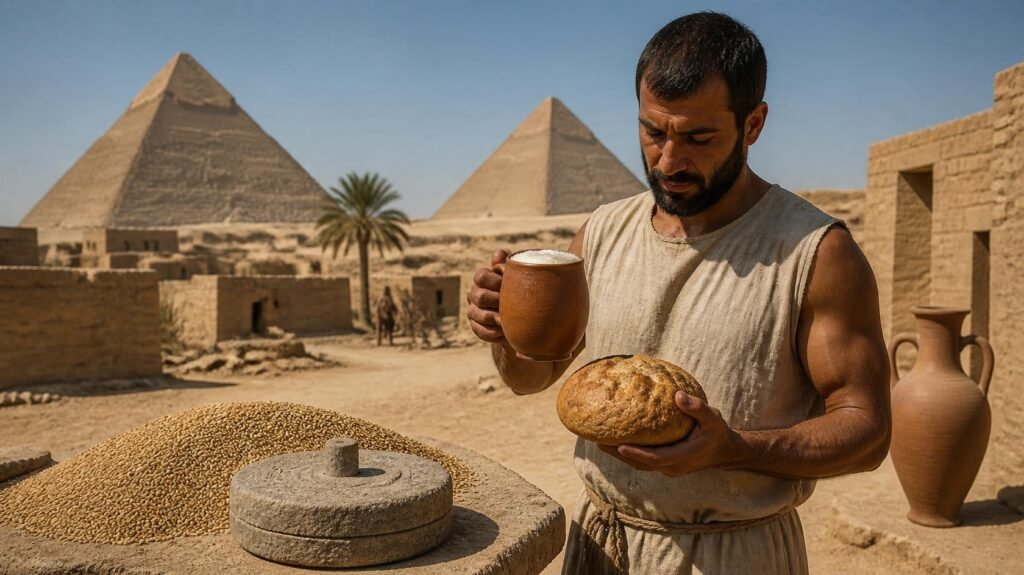
In the granaries of ancient Egypt, emmer wheat moved through the economy as both food and accounting. Archaeological sources describe bread and beer among the provisions supplied to workers, including laborers connected with large state building projects. Emmer was a staple, though surviving evidence does not prove that every pyramid builder received an identical daily ration.
From the Nile Valley, this grain traveled through Mediterranean farming networks and into parts of early Europe. Emmer remained important across many regions for thousands of years, appearing in household bread, porridge and other dishes rather than serving as a minor curiosity.
In Italy, emmer became known as farro and formed part of Roman food culture. It could support military provisioning, although it was not the only wheat eaten by Roman soldiers, and rations functioned primarily as supplies or compensation rather than a simple currency. The famous claim that Julius Caesar called it “Pharaoh’s wheat” needs stronger evidence, so it is best treated cautiously.
The grain played four main roles:
- Bread for households and workers
- Beer and other daily provisions
- Rations distributed through state and military systems
- Portable food for Roman armies
Control of such a grain meant control of harvests, storage and hunger. When a staple failed, people could face shortages within a single season, which explains why rulers monitored granaries and ration records so closely. Emmer’s history was therefore also a history of administration and power.
Yet the same husk that protected this valuable grain in storage would eventually make it slower and more expensive to process.
Why Hulled Emmer Lost Ground to Free-Threshing Wheat
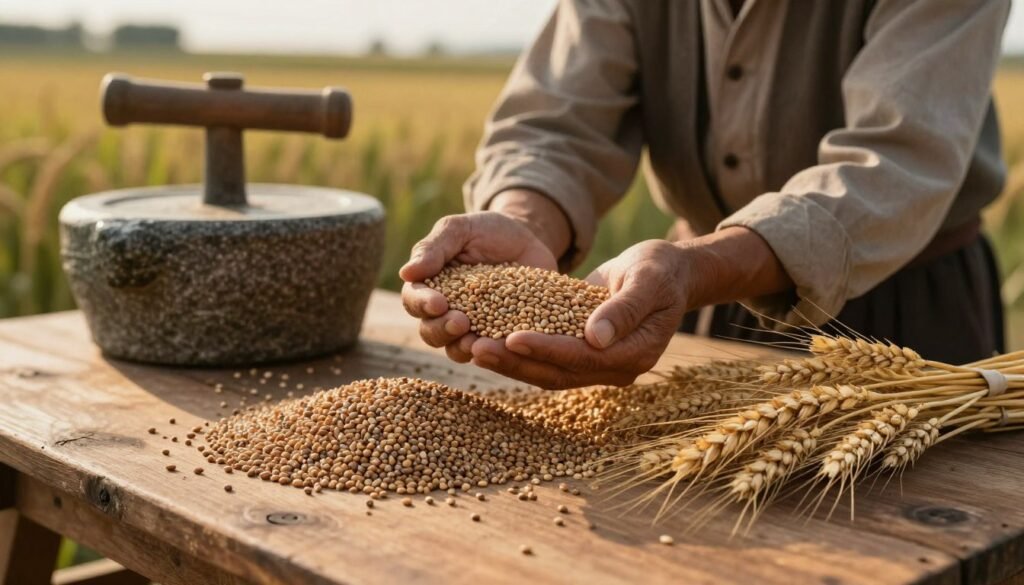
Emmer’s decline began with a stubborn arithmetic problem. Dehulling can remove a substantial share of harvested weight—sometimes reported at nearly 50%, depending on the variety and processing method—while free-threshing wheat releases its grain with far less work. By the end of the Bronze Age, roughly 3,000 years ago, higher-yielding wheats were gaining ground in many regions.
Emmer also tends to produce lower yields, with fewer tillers and taller plants than modern wheat. As farming became more mechanized, markets favored crops that could move quickly from field to mill, reducing labor, processing time and equipment costs.
The husk that once protected emmer grain in storage became a penalty in industrial agriculture. Each extra stage demanded energy and labor, so the crop lost commercial value even though its flavor, resilience and nutritional levels did not make it a bad grain.
Emmer survived in mountainous Italy, the Balkans, Ethiopia and India’s Deccan plateau, where small farms could preserve older varieties. It was not replaced everywhere at once; it simply became harder to justify where modern wheat offered faster processing and larger returns.
Emmer in the Family Tree of Modern Wheat
Emmer wheat belongs to the tetraploid branch of the wheat family, carrying 28 chromosomes compared with einkorn’s 14 and bread wheat’s 42. Its botanical name is Triticum turgidum ssp. dicoccon, also written Triticum dicoccum. Wheat evolution branches like a tree rather than running in a straight line. Emmer is a parent lineage of several wheat species, not the sole ancestor of every modern loaf.
Emmer, Einkorn and Spelt by Chromosome Count
In plant genetics, diploid means one set of chromosomes, tetraploid means two, and hexaploid means three. Einkorn is diploid, emmer is tetraploid, and spelt and bread wheat are hexaploid. These additional chromosome sets emerged through ancient crosses between related species, gradually changing the plant’s structure, protein potential and flour.
- Einkorn: 14 chromosomes
- Emmer: 28 chromosomes
- Bread wheat and spelt: 42 chromosomes
How Emmer Gave Rise to Durum and Bread Wheat
Wild emmer developed after wild einkorn crossed with a wild goatgrass. Through later selection for free-threshing grain, emmer became the parent lineage of durum wheat, the species associated with much of today’s pasta.
A further cross between tetraploid wheat and another goatgrass produced hexaploid wheat, including spelt and, later, modern bread wheat. That ancestry still appears in the kitchen: each flour carries different parts of this botanical history in its flavor, protein and baking behavior. When buying true emmer or farro, look for Triticum dicoccum on the label; “Triticum dicoccum” is the clearest identification.
Emmer Flour, Flavor and Gluten Compared With Modern Wheat
Emmer wheat flour brings a nutty, earthy flavor and a softer bite than modern wheat flour. Its protein content can be substantial, but its gluten structure is generally less elastic, which changes how the dough behaves. Emmer contains gluten and is not gluten-free, so people with celiac disease must avoid it.
Compared with strong bread flour, emmer flour usually produces dough with less lift and a more delicate structure. Careful mixing, gentle handling and longer fermentation can help, but flour varieties and milling methods affect protein levels and baking results. A softer gluten network does not make emmer safer for anyone avoiding gluten.
| Trait | Emmer | Spelt | Modern bread wheat |
| Flavor | Nutty, earthy | Mild, slightly sweet | Neutral |
| Dough | Soft, extensible | Moderately strong | Strong, elastic |
| Gluten structure | Gentle | Stronger network | Strongest network |
| Best use | Flatbreads, rustic loaves | Higher loaves | Tall, airy bread |
Use emmer wheat flour in a flatbread, rustic loaf or blended dough rather than substituting it one-for-one in a high-rise bread recipe. A pure emmer loaf may be denser and flatter, while adding strong wheat flour can improve its lift. Some people report that emmer feels easier to digest than modern wheat, but evidence and individual responses vary; its gluten content still matters for celiac disease.
Cooking With Emmer Wheat Today
Emmer wheat works beautifully in flatbreads, porridge, pasta and blended loaves. Its cooked grain has a firm, nutty chew, while stone-ground wheat flour carries a warm, earthy aroma and a pleasantly coarse texture. Blend emmer wheat with stronger wheat for taller loaves.
Common ways to use it include:
- Cooked whole grain in salads, soups and other dishes
- Porridge made from cracked grain
- Flatbread or chapati from khapli wheat flour
- Pasta made with emmer wheat
- A blended loaf using khapli wheat and strong heritage wheat
In India, khapli wheat is the traditional name for emmer and appears in chapati, bhakri and other flatbreads. Khapli wheat flour makes soft dough with a distinctive aroma, while whole khapli wheat gives cooked dishes a satisfying chew. In Italy, the grain is called farro, but menus may use “farro” for spelt or einkorn as well as khapli wheat, so check the label for Triticum dicoccum.
The modern return of emmer wheat gathered pace in Europe during the 1980s and in the United States during the 1990s. That revival reflects the continuing history of emmer wheat: cooks value khapli wheat for flavor, while farmers value it as a heritage crop with distinct varieties. Khapli wheat remains a useful term to know when shopping for authentic emmer flour.
Why Farmers and Cooks Still Keep Emmer Alive
In western New South Wales, emmer has produced reliable harvests in drought years where other traditional wheats struggled, though local results require careful verification. The crop can suit low-input farming, poor soils and variable climates, making khapli wheat a practical insurance option in some systems.
Keeping emmer in cultivation preserves genetic diversity and protects knowledge about how grain responds to place. Its protein, fiber and carbohydrate content resembles that of other whole grains, while its flavor gives cooks another food choice; it is not a cure or automatic health upgrade.
Emmer wheat still demands extra dehulling and processing, and khapli wheat often yields less than modern wheat. Those trade-offs explain why dedicated growers and cooks continue to protect it today.
Emmer earns its place through resilience and diversity, not through health miracles.
The story of khapli wheat is therefore both agricultural and culinary: a grain survives when its taste, farming value and cultural memory remain worth the work.
Conclusion
The history of emmer wheat is a story of scarcity, labor and survival rather than literal flavor wars. This ancient grain fed states and households, while the husk that protected it in storage later made it costly to process.
Try one dish with whole Triticum dicoccum, such as a flatbread or porridge, and check the label before cooking. The name “farro” can cover several hulled wheats, so look for the botanical name when you want true emmer.
The Cultural Echo: Cinema, Music & Modern Table
The history of emmer wheat still echoes through stories of ancient Egypt, where bread, beer and labor shaped daily life. For an atmospheric companion, watch The Egyptian (1945), then compare its vision of the Nile world with archaeological evidence from the British Museum’s Egyptian collections.
Bringing the History Home
Experience this history today at an archaeological museum, agricultural heritage site or working grain mill. A small stone mill, hand grinder, grain jar, baking stone and kitchen scale can turn cooking into a tactile lesson in farming, storage and processing.
For a premium table, choose whole Triticum dicoccum berries, stone-ground emmer flour, quality olive oil, sea salt and strong bread wheat for blending. Emmer contains gluten, so its flour is not suitable for people with celiac disease, regardless of its protein content or gentle gluten structure.