
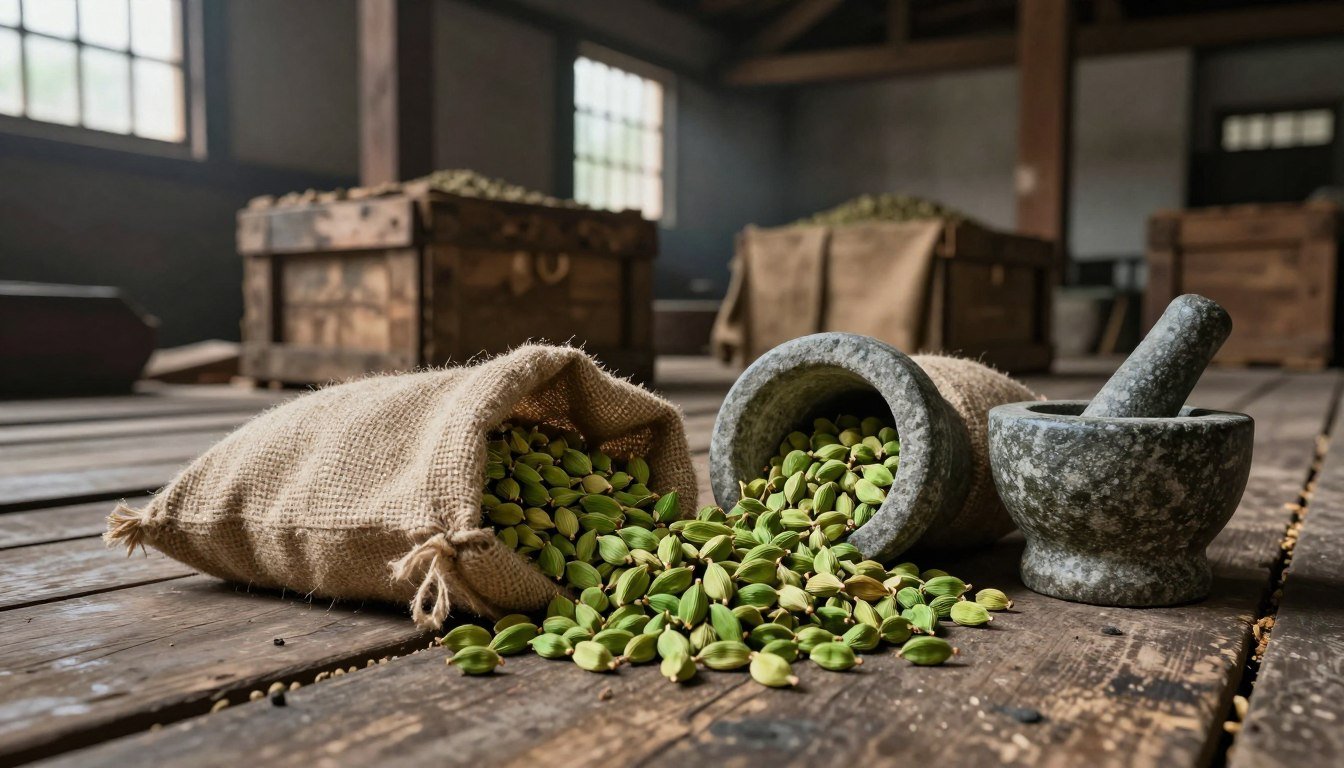
The smell hits first at a crowded dock, the moment a worker slits open a sack of pale green pods. Camphor, mint and lemon rise together and cling to the damp air.
This spice has perfumed rooms in India, Egypt, Constantinople and Scandinavia, and traders once called it the Queen of Spices. Its use stretches back at least 4,000 years, so its story reaches far beyond the kitchen.
Each pod is small, oval and three-sided, and it holds resinous black seeds. The next pages trace those pods back to the forest where they began.
Key Takeaways
- Green cardamom grew wild in the rain forests of southern India.
- People have used the spice for at least 4,000 years.
- Egyptians chewed the pods, and Greeks and Romans put them in perfume.
- Hand picking and drying make it the third most costly spice.
- Scholars still debate whether Vikings or Moors brought it to Scandinavia.
- Guatemala is now the largest producer and exporter.
Where the Queen of Spices Began in India’s Rain Forests
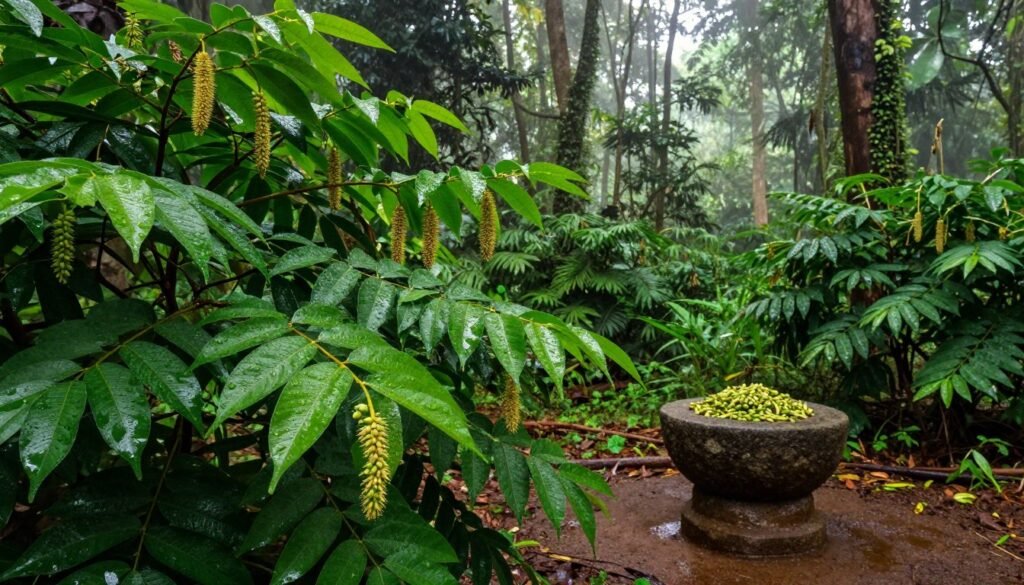
Green cardamom grew wild in the rain forests of the Western Ghats in southern India. The plants were so common there that the area took the name Cardamom Hills.
The plant, Elettaria cardamomum, is a perennial bush of the ginger family (Zingiberaceae). It also grows wild in Sri Lanka. Cardamom is the third most costly spice after saffron and vanilla, and the harvest explains why.
Workers pick the shoots at the base of the bush by hand as each one ripens. Then they dry the cardamom pods. Because the shoots ripen at different times, one bush needs many visits.
The Queen of Spices earns her price one hand-picked, ripening shoot at a time.
Buyers meet three names for the spice:
- Green cardamom, the queen of spices
- True cardamom or Ceylon cardamom, other names for the same plant
- Black cardamom, a separate variety with a smokier taste
Those hand-dried pods soon left the forest, carried by the first civilizations that learned to prize them.
The History of Green Cardamom From Egyptian Temples to Roman Perfume
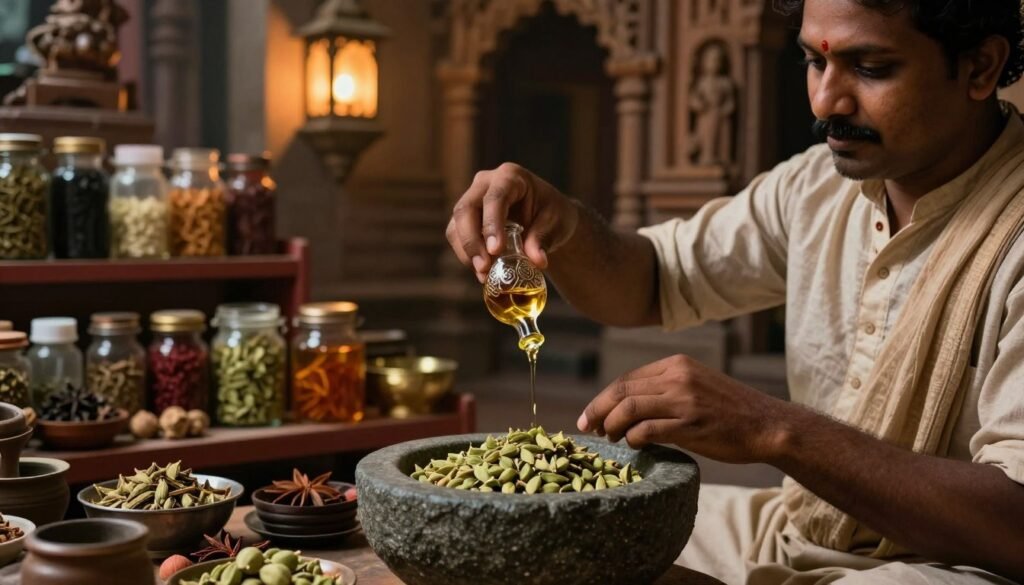
Ancient Egyptians chewed cardamom pods to freshen their breath and clean their teeth. They also used the spice in medicine, rituals and embalming.
Greeks and Romans prized its pungent aroma. It became a main ingredient in perfumes and aromatic oils, and a 2020 research paper on Greco-Roman Egypt describes how temple laboratories prepared and stored such perfumes.
A spice route is a trade network of overland and sea paths that carried goods such as spices between South Asia, the Middle East and Europe. Arab and Persian regions sat along these paths. Early traders carried cardamom west, and it became a sought-after commodity in the Middle East and Europe.
Healers also used it for indigestion, asthma and bad breath. These are traditional uses, not proven cures.
The spice kept moving, and its next stop was a surprise: the cold kitchens of the far north.
How Cardamom Reached Scandinavia and Spread Across Kitchens

Why does a tropical spice define Swedish baking? The answer is still a puzzle, and the spice spread far beyond Sweden.
Vikings or Moors: Who Brought It North
Many Swedes believe Vikings found cardamom in the bazaars of Constantinople about 1,000 years ago. Culinary archaeologist Daniel Serra doubts this, because little archaeological or literary evidence shows imported spices in the Viking Age. He thinks the Moors introduced it after settling the Iberian Peninsula in the eighth century.
The Danish monk Knud Juul mentions it in the 13th-century cookbook Libellus de Arte Coquinaria. Today Sweden consumes 18 times more per capita than the median country, and Norway almost 30 times more.
Where Cardamom Grows and Is Used Today
British colonists set up plantations in the 19th century. Guatemala is now the largest producer and exporter, and in some areas the crop is worth more than coffee. India, Sri Lanka, Tanzania and Indonesia also grow it.
| Region | Dish or drink | Role of the spice |
|---|---|---|
| Middle East | Qahwah | Flavors the coffee |
| Morocco | Ras el hanout | Part of the spice blend |
| Scandinavia | Kardemummabulle | Flavors the sweet bun |
| Asia | Cardamom tea | Scents the tea |
Cardamom travels well because it flavors coffee, tea, bread and blends alike.
Quick answers about the spice follow.
Conclusion
The pod’s long trip is still visible in a cup of spiced coffee. Trade and taste carried green cardamom from a few Indian hills to Egyptian temples, Roman perfume shops and Swedish ovens over thousands of years.
Its story is also still debated, since scholars disagree about who first brought it north. That open question is part of its charm as an ingredient.
Buy a small bag of whole pods, crush a few and drop them into coffee or rice pudding. One sip or spoonful will show how the flavor has lasted. Go ahead and taste it.